
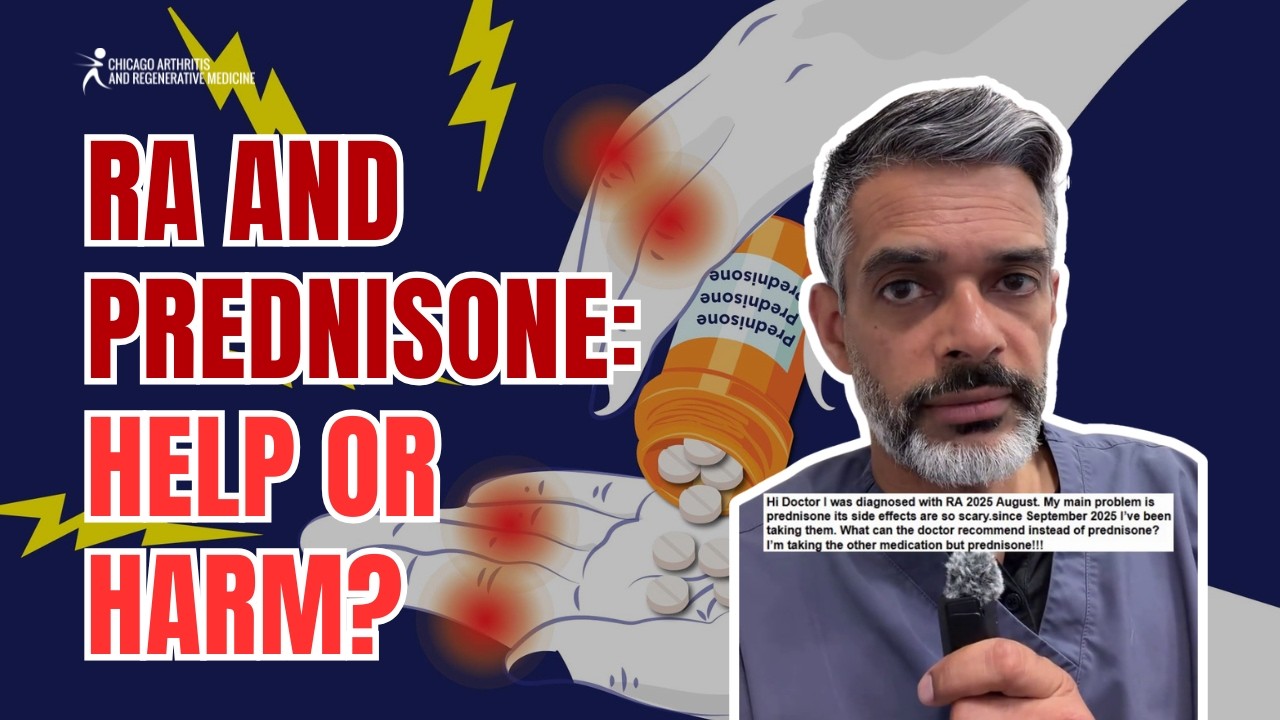
Why Long-Term Prednisone Use for Rheumatoid Arthritis May Be Doing More Harm Than Good
If you were recently diagnosed with rheumatoid arthritis (RA) and started on prednisone, you’re not alone. Steroids like prednisone are one of the most common tools doctors use to calm inflammation quickly. But what happens when “short-term” turns into months — and you still can’t get off it?
As a Chicago rheumatologist specializing in rheumatology and regenerative medicine, this is one of the most common concerns I hear from new RA patients. Let’s break down why long-term steroid use is risky, and what a safer, more sustainable treatment plan looks like.
What Is Rheumatoid Arthritis?
Rheumatoid arthritis is a chronic autoimmune condition that causes your immune system to mistakenly attack your joints — and sometimes other organs. Left uncontrolled, it can cause lasting joint damage and inflammation throughout the body.
Because RA is a long-term condition, it requires long-term treatment to keep the immune system in check. That’s where steroids come in — but only as a piece of the puzzle, not the whole solution.
Why Steroids Are Used — and Why They’re Not a Long-Term Fix
Steroids such as:
- Prednisone
- Cortisone
- Methylprednisolone
…are excellent at quickly reducing inflammation. They’re often used as a “bridge” therapy while longer-term medications take effect.
The problem? When steroid use continues for weeks, months, or years, the side effects can add up.
Potential Side Effects of Long-Term Steroid Use
- Increased risk of infections
- Osteoporosis (bone thinning)
- Muscle loss
- Diabetes or blood sugar issues
- Cholesterol imbalances
- Adrenal gland dysfunction
- Stomach ulcers
- Mood or psychiatric changes
Even short-term use of just a few weeks can start to show early warning signs.
How to Manage Steroid Side Effects
If steroids are still medically necessary for a period of time, there are ways to help protect your body, including:
- Bisphosphonates to help protect bone density
- Ulcer-prevention medications for patients prone to stomach issues
- Monitoring for blood sugar, cholesterol, and infection risk
However, managing side effects should never be the long-term strategy. The real goal is transitioning off steroids safely.
The Better Long-Term Solution: Disease-Modifying Treatment
The most effective way to reduce or eliminate steroid dependence is by using a disease-modifying antirheumatic drug (DMARD) — a treatment designed to control the immune system long-term without the same risk profile as steroids.
In rheumatology, we follow a concept called “treat to target.” This means the goal of your treatment plan should be:
- Remission, or
- Low disease activity
If you’re still relying on steroids to control your symptoms, it may be a sign that your current treatment plan needs to be adjusted or escalated.
My Approach to Steroid Use in RA Patients
As a rheumatology specialist, here’s how I approach steroid management for my patients:
- Use steroids for the shortest time possible
- Evaluate whether your disease-modifying treatment needs to be started, changed, or strengthened
- Proactively prevent side effects if you’re at higher risk (bone health, stomach health, etc.)
- Focus on the bigger picture — getting you off steroids safely while keeping your RA well controlled
The goal is always the same: long-term joint pain relief and disease control — without long-term steroid risk.
When to Talk to a Rheumatology Specialist
If you’ve been on prednisone for weeks or months and don’t feel like you’re making progress toward stopping it, that’s a signal to revisit your treatment plan. You deserve a plan built for the long run, not just symptom control today.
Ready to Explore a Long-Term Arthritis Treatment Plan?
You don’t have to stay on steroids indefinitely to manage rheumatoid arthritis. At Chicago Arthritis, we specialize in arthritis treatment in Chicago, including advanced disease-modifying therapies and regenerative medicine options designed to support long-term joint health.
Visit ChicagoArthritis.com to learn more or schedule a consultation with a Chicago rheumatologist today.
Can You Get Pregnant with Rheumatoid Arthritis? What Every Woman Should Know
Rheumatoid Arthritis Fatigue Isn’t Just ‘In Your Head’
Long-Term vs Short-Term Steroid Use in Autoimmune Conditions