
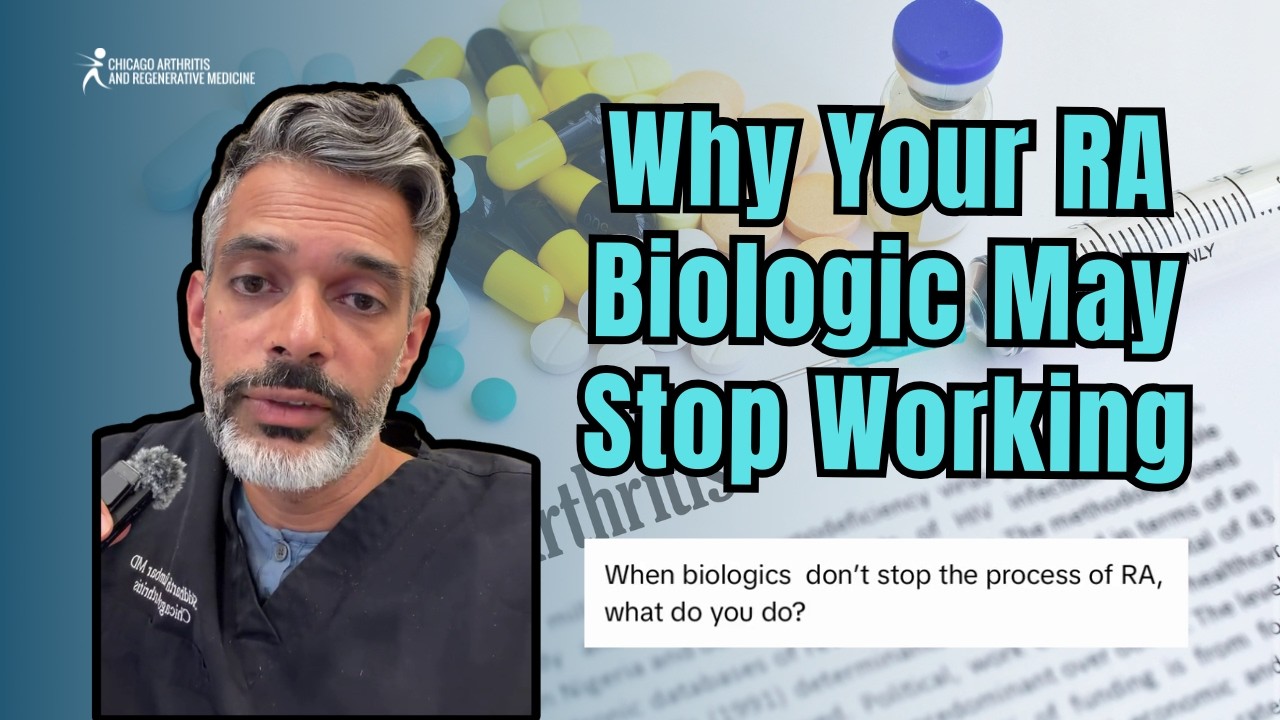
Why Isn’t My Rheumatoid Arthritis Medication Working Anymore?
If you’re living with rheumatoid arthritis (RA) and feel like your biologic medication just isn’t cutting it anymore, you’re not alone — and you’re not out of options. Many patients assume that if a biologic stops working, biologics in general “don’t work” for them. But the real answer is often more nuanced than that.
At Chicago Arthritis, we help patients get to the bottom of exactly what’s happening in their bodies so they can find real, lasting relief.
What Is Rheumatoid Arthritis, Really?
RA is a chronic, systemic autoimmune condition. Instead of protecting you from viruses and bacteria, your immune system mistakenly attacks your own joints. This can cause:
- Inflammation and swelling
- Chronic pain
- Joint damage over time
- Involvement of other organs in more severe cases
Because RA affects the whole body, effective treatment requires more than just masking symptoms — it requires calming the underlying immune dysfunction.
How Biologic Medications Help
Biologic medications have been used to treat RA and other autoimmune diseases for over 30 years. Compared to older, non-specific treatments, biologics are:
- More targeted
- More effective for many patients
- Generally safer long-term than steroids like prednisone
But here’s the key thing many patients don’t realize — there isn’t just one biologic because there isn’t just one cause of RA.
Why Are There So Many Types of Biologics?
Researchers have identified 12 or more distinct pathways that can drive rheumatoid arthritis. These pathways involve:
- Genetics
- Environmental triggers
- How your immune system communicates (and miscommunicates)
- Your immune system’s ability to regulate itself
Because RA can be driven by different combinations of these pathways, different biologics target different parts of the problem. This is why a treatment that works well for one patient may not work as well for another — and why switching medications sometimes leads to major improvement.
Why Might Your RA Treatment Stop Working?
It’s fairly common for RA patients to see initial improvement — sometimes even reaching low disease activity — only to notice symptoms creeping back later. This can happen for a few reasons:
1. Your Body May Develop Antibodies to the Medication
Over time, your immune system can start recognizing the medication itself and reduce its effectiveness. Adding a medication like methotrexate can sometimes help prevent this.
2. Other Pathways May Become More Active
Since RA involves multiple pathways, blocking one may allow another to become more prominent over time, causing symptoms to return.
3. The Medication May Never Have Fully Addressed Your Specific RA Pathway
Some patients simply respond better to a treatment targeting a different mechanism of action.
How a Rheumatologist Approaches This Problem
A knowledgeable rheumatologist doesn’t just look at whether you’re “better or worse” — they dig into why.
If There’s Significant, Objective Inflammation
If exams, imaging, and labs show active inflammation, this usually signals the current biologic isn’t controlling the disease, and switching to a different mechanism of action may be the right move.
If You’re Only Partially Better
If you’re around 50% improved, there are several strategies to consider:
- Adding a second medication, such as methotrexate, to work alongside your biologic
- Weight management support, including GLP-1 medications — emerging evidence suggests this may improve how well the body responds to biologic treatment
- Optimizing anti-inflammatory nutrition
- Adding targeted supplements
- Incorporating joint-supportive exercise
If Inflammation Is Controlled but You Still Have Pain
This is one of the most overlooked scenarios. RA patients can experience pain from non-inflammatory sources, including:
- Osteoarthritis (wear-and-tear arthritis)
- Tendonitis
- Myofascial pain
- Fibromyalgia (common alongside autoimmune disease)
- Pinched nerves
- Low vitamin D
- Thyroid imbalances
- Low B12
- Adrenal or hormonal changes, especially after age 50
In these cases, your biologic may be doing its job — but other health issues need separate attention.
The Bottom Line
If your RA symptoms are worsening or plateauing, it doesn’t necessarily mean your treatment has failed. It may mean it’s time for a deeper conversation with your rheumatologist about:
- Whether your current pathway is the right target
- Whether additional support is needed
- Whether other conditions are contributing to your pain
The right rheumatologist won’t just adjust your prescription — they’ll partner with you to investigate the full picture of your health.
Ready to Get to the Root of Your Joint Pain?
At Chicago Arthritis, we specialize in rheumatology and regenerative medicine, helping patients find real answers for RA, osteoarthritis, autoimmune conditions, and chronic joint pain.
Visit ChicagoArthritis.com to learn more or schedule a consultation today.
The Real Goal of Rheumatoid Arthritis Treatment
First-Line Treatment for Moderate to Severe Rheumatoid Arthritis
Mild Rheumatoid Arthritis: Do You Always Need Strong Medication?