
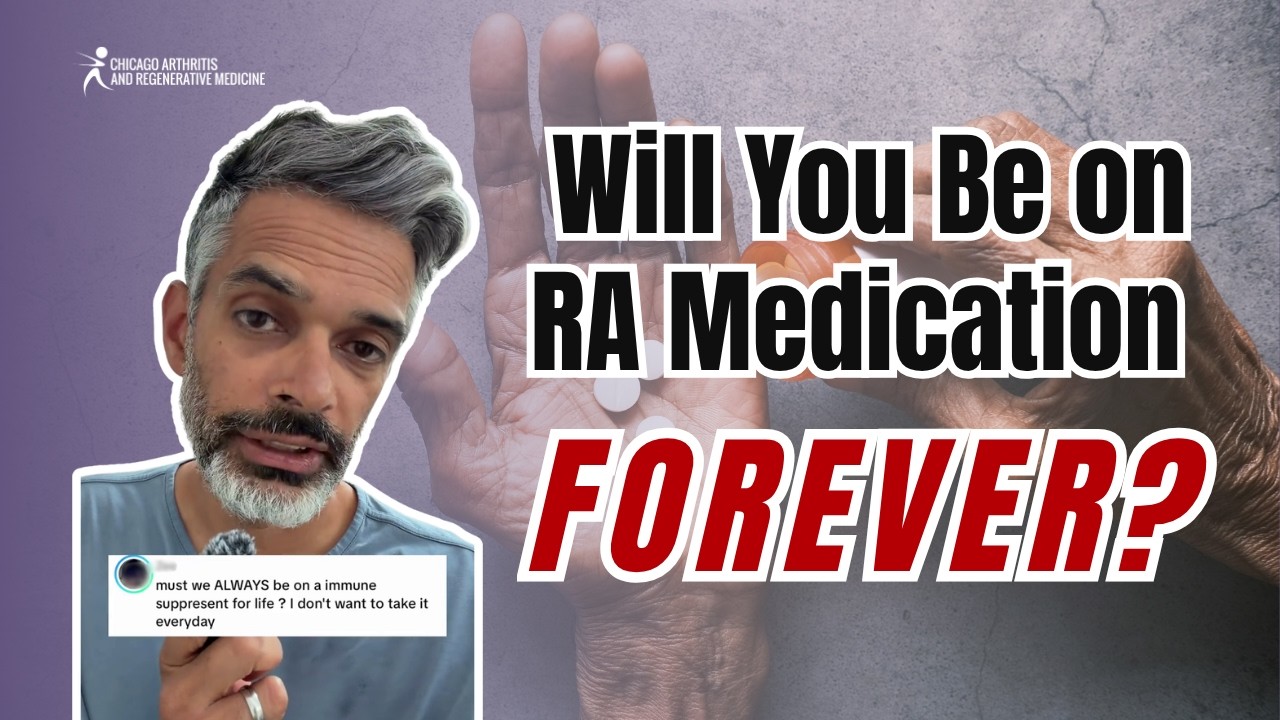
How Long Will You Need Medication for Rheumatoid Arthritis?
If you’ve just been diagnosed with rheumatoid arthritis (RA), one of the first questions you probably have is: “Will I be on medication forever?”
It’s a completely normal question — and an important one. As a Chicago Rheumatologist specializing in arthritis treatment, this is one of the most common concerns newly diagnosed patients bring up. Let’s break down what the research and clinical experience tell us.
Can You Ever Stop RA Medication?
In theory, yes — but only under specific circumstances.
If your rheumatoid arthritis reaches a state of very low disease activity or clinical remission, your doctor may consider tapering your medication. However, for the vast majority of RA patients, some form of long-term, disease-modifying treatment will still be necessary.
Here’s why.
Why Long-Term Treatment Matters for RA
RA Is an Aggressive, Inflammatory Condition
Rheumatoid arthritis isn’t just “achy joints.” Left uncontrolled, it can cause:
- Severe joint inflammation
- Irreversible joint damage
- Chronic pain and stiffness
- Functional limitations and disability
- Increased risk of other organ involvement
- Higher long-term risk of heart disease
Because of this, controlling inflammation early and consistently is the top priority in any effective arthritis care plan.
RA Is a Chronic Autoimmune Disease — Not a One-Time Problem
It helps to understand what RA actually is.
Unlike cancer (where removing a problematic cell can resolve the disease) or a broken bone (which heals and stabilizes), RA is fundamentally different:
- It’s caused by the immune system miscommunicating
- Your body mistakenly identifies healthy joint tissue as a threat
- It then attacks that tissue, causing ongoing inflammation
This isn’t a condition that simply “turns off.” It requires ongoing management — much like other chronic health conditions.
The Good News: RA Can Be Well-Controlled
While a complete “cure” isn’t realistic for most patients, the outlook for RA today is genuinely encouraging.
With proper rheumatology specialist care, many patients can:
- Achieve low disease activity or full remission
- Eventually taper their dosage
- Reduce treatment frequency
- Maintain an active, normal lifestyle long-term
When Might Tapering Be Possible?
Tapering is generally only considered when:
- Disease activity is very low or in remission
- The condition has been mild (not moderate-to-severe)
- Close, ongoing monitoring is in place
For moderate to severe RA, discontinuing medication entirely is typically not realistic and can risk disease flare-ups or further joint damage.
What This Means for You
The key takeaway? RA is manageable — but it requires a long-term partnership with your care team.
Think of it less as “fighting a temporary illness” and more as maintaining long-term wellness, similar to how someone manages high blood pressure or diabetes.
With the right treatment plan, monitoring, and — increasingly — regenerative medicine approaches like PRP therapy, many patients find real, lasting relief from joint pain and inflammation while protecting their long-term joint health.
Take the Next Step Toward Joint Pain Relief
If you’re newly diagnosed with rheumatoid arthritis — or you’re looking for a more personalized approach to autoimmune disease treatment, osteoarthritis treatment, or chronic pain management — you don’t have to navigate it alone.
At Chicago Arthritis, our team specializes in advanced rheumatology and regenerative medicine treatments designed to help you achieve lasting control over your condition.
👉 Learn more and schedule a consultation at ChicagoArthritis.com
The Real Goal of Rheumatoid Arthritis Treatment
First-Line Treatment for Moderate to Severe Rheumatoid Arthritis
Mild Rheumatoid Arthritis: Do You Always Need Strong Medication?