
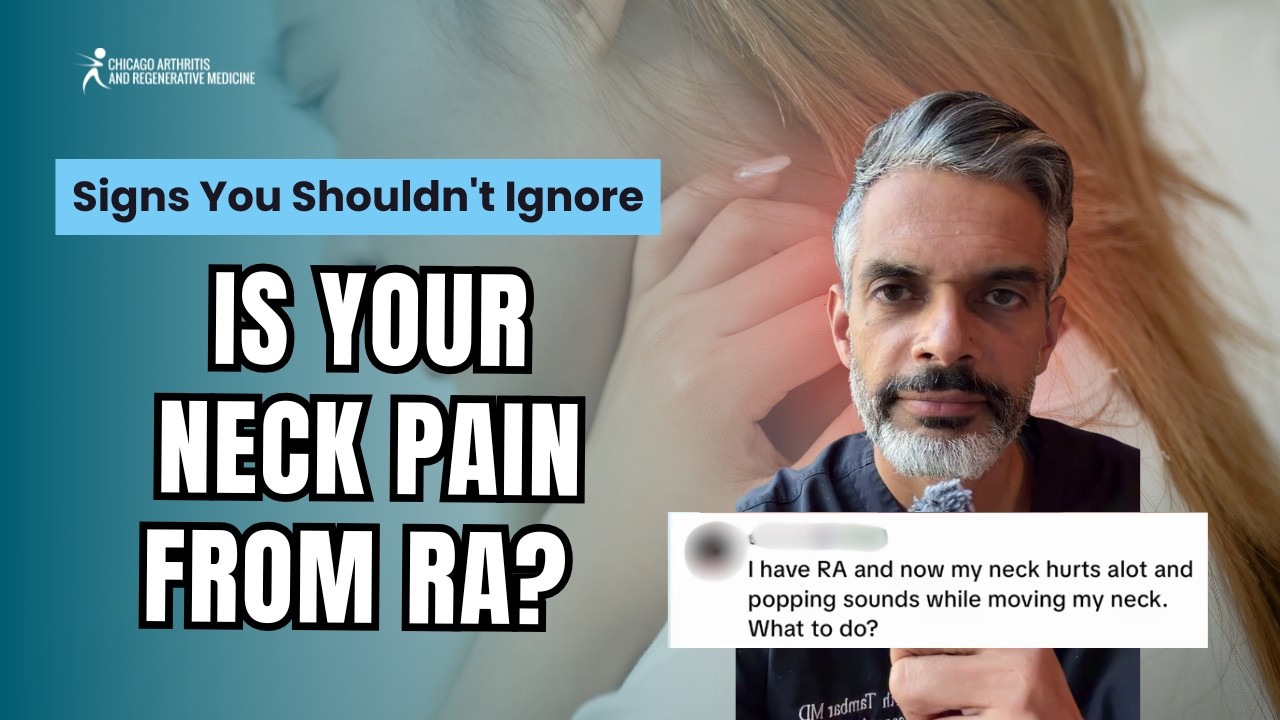
Rheumatoid Arthritis and Neck Pain: When It’s More Than Muscle Tension
If you have rheumatoid arthritis (RA) and you’ve been experiencing neck pain, it can be tempting to blame it on poor sleep, stress, or a “tight muscle.” But for people living with RA, neck pain can sometimes point to something more significant happening in the upper cervical spine.
As a Chicago Rheumatologist specializing in both rheumatology and regenerative medicine, Dr. Siddharth Tambar of Chicago Arthritis helps patients understand when neck pain is simple, and when it needs closer attention.
What Is Rheumatoid Arthritis, and Why Does It Affect the Neck?
Rheumatoid arthritis is an autoimmune disease in which the immune system mistakenly attacks the lining of the joints. Most people know RA for its effects on the:
- Hands
- Wrists
- Feet
However, RA can also affect the cervical spine, especially the upper portion of the neck near the base of the skull.
How Common Is Cervical Spine Involvement?
Older research suggested cervical spine abnormalities occurred in roughly 43% to 86% of RA patients. Thankfully, these numbers are likely overestimated for today’s patients, since RA is now treated earlier and more aggressively than in the past.
Still, cervical spine involvement remains an important concern, particularly for patients with:
- Long-standing RA
- Erosive or poorly controlled disease
How RA Can Affect the Upper Neck
Inflammation from RA can damage joints, erode bone, and weaken the ligaments that normally stabilize the upper cervical spine.
This can lead to a condition called atlantoaxial instability, which is abnormal movement between the first and second neck vertebrae (located just below the skull).
In more advanced cases, instability can occur at multiple levels of the neck. In severe situations, this instability may compress the spinal cord or brainstem — which is why early recognition matters.
Symptoms to Watch For
Not all neck-related RA symptoms are obvious. Some patients may have significant instability with very little pain, so it’s important to know the full range of warning signs.
Common Symptoms
- Pain at the top of the neck or base of the skull
- Pain that worsens with movement
- Headaches starting at the back of the head
- A sensation of “clunking” or instability in the neck
Symptoms That Require Urgent Evaluation
- Weakness or numbness
- Loss of coordination or balance problems
- Changes in bowel or bladder control
If you experience any of these neurologic symptoms, seek medical evaluation promptly.
How Cervical Spine Involvement Is Diagnosed
For patients with long-standing erosive RA — or those with concerning symptoms — imaging can help clarify what’s going on.
- Flexion-extension X-rays – Used to evaluate abnormal neck movement and instability
- MRI – Especially useful when inflammation or spinal cord compression is a concern
Treatment Options for RA-Related Neck Issues
1. Control the Underlying Inflammation
The first step is always managing RA itself with appropriate disease-modifying medications. This helps prevent further joint and ligament damage, although it may not reverse instability that has already developed.
2. Physical Therapy
Physical therapy can improve posture, strengthen supporting muscles, and enhance overall neck mechanics. However, instability and spinal cord compression must be ruled out before beginning any aggressive neck exercises or manipulation.
A Word of Caution: Chiropractic Care
Patients with RA and cervical spine involvement should be very cautious about chiropractic neck manipulation. If instability is present, forceful manipulation of the neck can be dangerous.
3. Regenerative Medicine Options
For carefully selected patients — those with well-controlled inflammation and imaging that does not show dangerous instability — treatments such as:
- Prolotherapy
- PRP therapy (Platelet-Rich Plasma)
may be considered to help with persistent mechanical pain or ligament-related instability. It’s important to note that evidence supporting these treatments specifically for RA-related cervical instability is still limited. They should never replace proper imaging or a neurologic evaluation.
4. Surgical Evaluation
If there is significant instability, spinal cord compression, or progressive neurologic symptoms, a surgical consultation may be necessary, and in some cases, surgical stabilization is required.
The Bottom Line
Most neck pain in people with rheumatoid arthritis will not turn out to be a serious cervical complication. However, RA-related neck pain deserves a more thoughtful evaluation than simply assuming it’s muscle tension.
If you have RA and are experiencing new or worsening neck pain, don’t wait to get it checked.
Take the Next Step With Chicago Arthritis
At Chicago Arthritis, our team specializes in comprehensive arthritis care, autoimmune disease treatment, and advanced regenerative medicine options tailored to each patient’s needs.
👉 Visit ChicagoArthritis.com to learn more or schedule a consultation with our team today.