
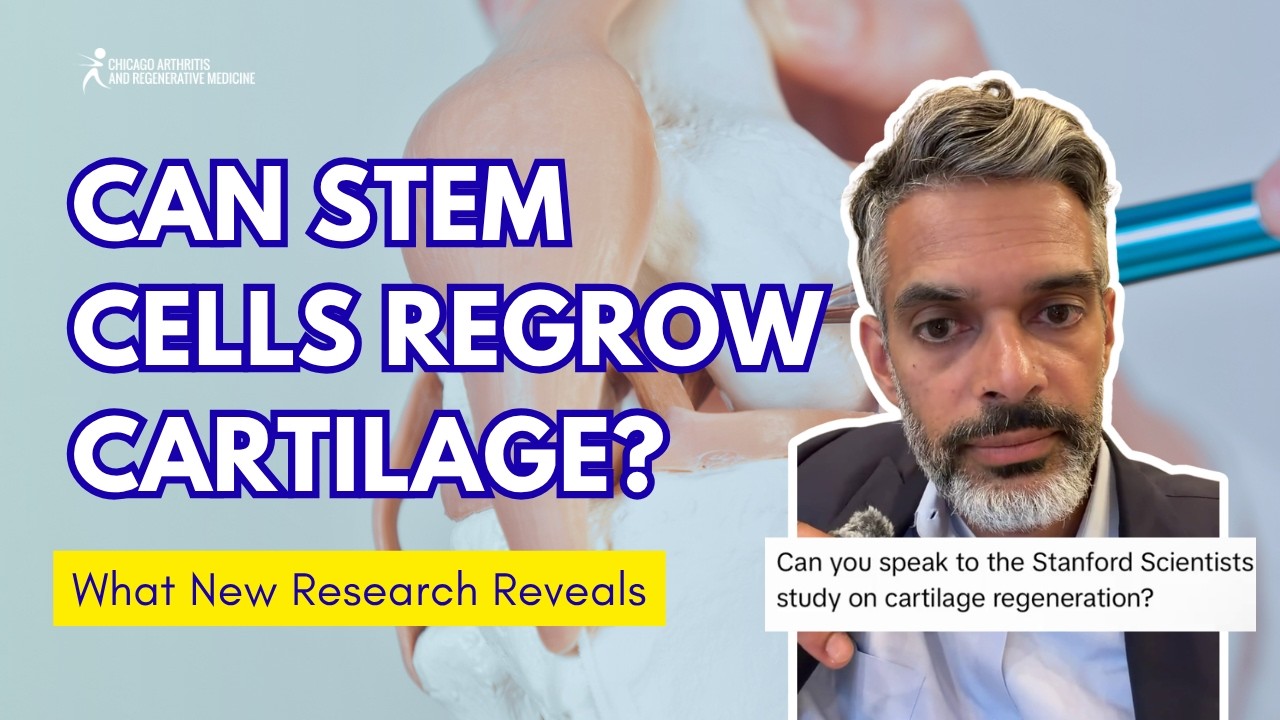
Can Stem Cells Regrow Cartilage? What New Research Means for Arthritis Patients in Chicago
If you’re living with joint pain from osteoarthritis, you’ve probably wondered: is there a treatment that can actually repair my cartilage, not just mask the pain?
A fascinating study out of Stanford offers a glimpse into where regenerative medicine may be headed — and what it means for patients seeking real solutions today.
Below, we break down the science in plain language, explain what treatments are available right now, and help you understand what “cautious optimism” really means when it comes to your joints.
Understanding Osteoarthritis: More Than Just “Wear and Tear”
Osteoarthritis isn’t simply the result of aging joints wearing out. It’s primarily a condition of joint instability that, over time, leads to:
- Breakdown of cartilage
- Chronic pain
- Progressive loss of function
Because cartilage has very limited ability to heal itself, researchers and physicians have spent years looking for ways to help the body regenerate this critical tissue.
The Current Standard: Microfracture Surgery
One existing surgical approach is called microfracture. Here’s how it works:
- A surgeon creates a small hole in an area of damaged cartilage
- This allows blood and mesenchymal stem cells to seep into the area
- The goal is for these cells to repair the cartilage
The problem? In most cases, the tissue that forms isn’t true cartilage. Instead, it’s a fibrocartilage, essentially scar tissue, that can help with pain but doesn’t fully restore the joint the way natural cartilage would.
What the Stanford Study Found
Researchers examined skeletal stem cells in both humans and mouse models and discovered two key insights:
1. Stem Cells Become Less Effective With Age
The study found that as we age, our skeletal stem cells become less capable of chondrogenesis — the process of forming new cartilage. This helps explain why younger patients often bounce back from joint injuries more easily than older adults: their stem cells are simply more metabolically active and efficient.
2. Growth Factors May “Coach” Stem Cells to Repair Cartilage
When researchers performed microfracture in arthritic mouse joints and added specific growth factors known to support healing, the skeletal stem cells were more likely to produce actual cartilage repair — not just scar tissue.
In other words, giving stem cells the right chemical “instructions” may help direct them toward genuine tissue regeneration.
Why This Matters: Where Regenerative Medicine Is Headed
This research points to an exciting possibility for the future: using targeted growth factors or signaling molecules to guide our own stem cells toward more precise, effective healing.
What’s Already Working Today: Subchondroplasty
While the Stanford findings represent promising future potential, patients don’t have to wait for tomorrow’s treatments; some highly effective regenerative options already exist.
One is called subchondroplasty.
Traditionally, bone marrow concentrate treatments for osteoarthritis involved injecting stem cells into the joint and surrounding ligaments. This approach offered good pain relief and improved function, often lasting several years.
However, newer data — including research from Dr. Philippe Hernigou in France — shows that for patients with moderate arthritis or worse, injecting into the subchondral bone (the bone layer just beneath the cartilage) can offer additional benefits:
- Greater pain relief compared to joint injection alone
- Potential to slow the progression of osteoarthritis
- Reduced likelihood of eventually needing joint replacement
Unlike microfracture, subchondroplasty approaches the area from the bone side rather than through the cartilage, stimulating the stem cells naturally present within the bone itself.
A Word of Caution: Mice Aren’t Humans
It’s important to stay grounded. Medical research is full of exciting results in mouse and rat models that don’t always translate to humans. While the biological principles behind this study make sense, we won’t know its true clinical impact until human trials confirm the results.
The takeaway: Be optimistic about the future of regenerative medicine, but rely on treatments with proven, real-world results today.
Your Joint Health Options Today
If you’re dealing with osteoarthritis or chronic joint pain, effective regenerative treatments are available now, including:
- Bone marrow concentrate therapy
- PRP (platelet-rich plasma) therapy
- Subchondroplasty
- Comprehensive rheumatology care tailored to your condition
Take the Next Step Toward Joint Pain Relief
Advances in regenerative medicine are opening new doors for arthritis and joint pain patients, and the science is only getting better. If you’re ready to explore your treatment options with an experienced Chicago rheumatologist, our team is here to help.
Visit ChicagoArthritis.com to learn more or schedule a consultation today.
Case Study: Bone Marrow Stem Cells for Knee Arthritis | Chicago Arthritis
Non Surgical treatments for Neck Pain, PRP-Stem cells
Rheumatoid arthritis treatment- when to use PRP and Stem cells.