
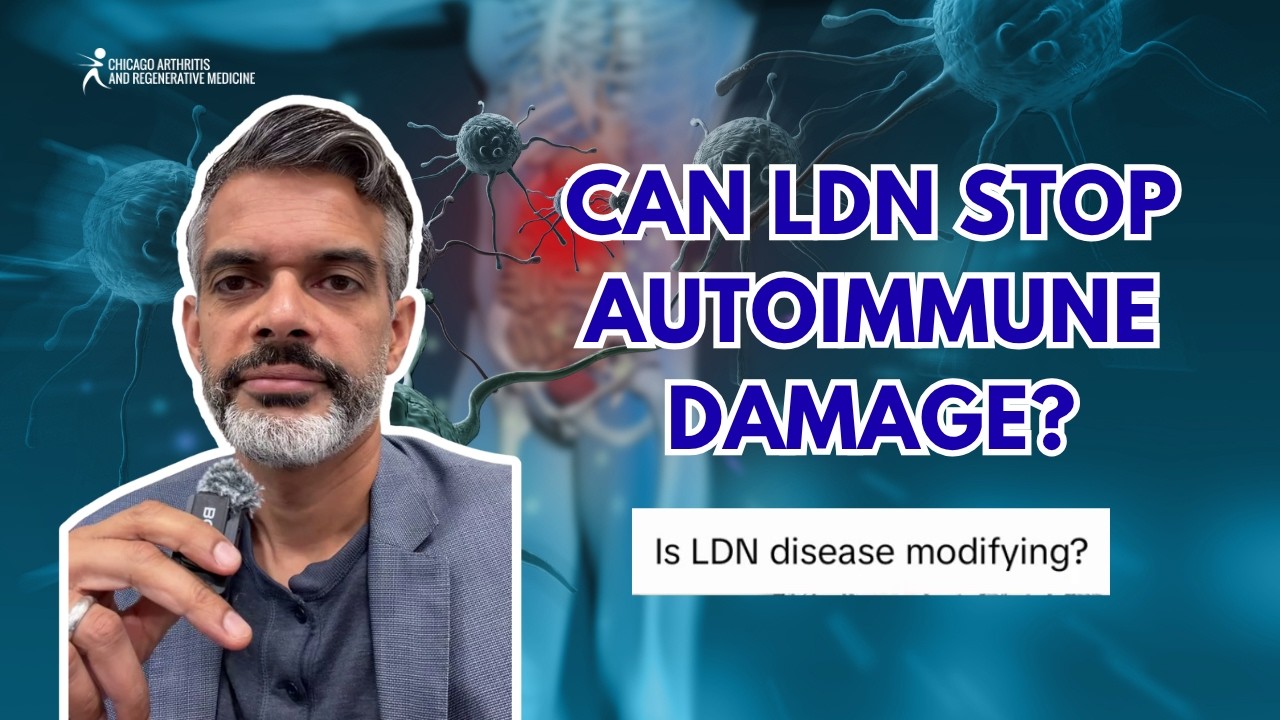
Low-Dose Naltrexone for Autoimmune Disease: What Chicago Patients Need to Know
If you’re living with rheumatoid arthritis, lupus, or another autoimmune condition, you’ve probably heard about low-dose naltrexone (LDN) as a “natural” or gentler alternative to traditional medications. But does it actually work — and can it protect your joints from long-term damage?
As a Chicago Rheumatologist and regenerative medicine physician, Dr. Siddharth Tambar of Chicago Arthritis breaks down what the science actually shows about LDN, separating promising theory from proven treatment.
What Is Low-Dose Naltrexone (LDN)?
Naltrexone is an FDA-approved medication, typically prescribed at 50 mg, used to treat alcohol and opioid use disorders. It works by blocking opioid receptors in the body.
Low-dose naltrexone (LDN) refers to a much smaller dose — usually between 1.5 mg and 4.5 mg daily. At this lower dose, it’s used off-label for:
- Chronic pain
- Inflammatory conditions
- Autoimmune diseases
Is LDN Immunomodulatory?
Possibly — but this needs context.
LDN briefly blocks opioid receptors. One theory suggests that once the medication wears off, the body may increase endorphin production and shift opioid receptor activity. Some laboratory research also suggests naltrexone may influence inflammatory signaling pathways, including toll-like receptor 4, potentially affecting inflammatory cytokine production.
These mechanisms are scientifically interesting, but here’s the key point:
A theoretical immune mechanism does not automatically mean a medication meaningfully controls autoimmune disease in real patients.
Is LDN an Immunosuppressant?
No. Low-dose naltrexone is not classified as an immunosuppressive medication, unlike:
- Prednisone
- Methotrexate
- Biologic therapies
This means LDN doesn’t appear to carry the same infection risks associated with traditional immunosuppressive treatments. However, long-term safety data for LDN in autoimmune disease remains limited.
The Most Important Question: Is LDN Disease-Modifying?
This is where patients need clear, honest information.
Based on current evidence, the answer is no.
A true disease-modifying treatment must do more than reduce pain. In rheumatoid arthritis, for example, an effective therapy should:
- Control synovitis (active joint inflammation)
- Prevent progressive joint erosion
- Reduce long-term disability
LDN has not been shown in high-quality clinical trials to prevent:
- Joint damage
- Organ damage
- Long-term disability from RA or other systemic autoimmune diseases
Small, encouraging studies exist in conditions like Crohn’s disease, but evidence supporting LDN specifically for rheumatoid arthritis remains extremely limited.
Realistic Expectations for LDN
LDN may still have a role for some patients — just not as a stand-alone or disease-modifying therapy. It may help with:
- Reducing pain
- Improving sleep quality
- Enhancing overall quality of life
- Potentially reducing reliance on other symptom-control medications
It’s generally inexpensive and well-tolerated, though some patients experience:
- Vivid dreams
- Insomnia
- Headaches
- Gastrointestinal symptoms
Important safety note: LDN cannot be safely combined with opioid medications, since it blocks opioid receptors and may trigger withdrawal in opioid-dependent patients.
The Bottom Line
LDN may offer some symptom relief and may have mild immunomodulatory effects — but it has not been proven to modify autoimmune disease or prevent long-term joint or organ damage.
For patients with rheumatoid arthritis or other potentially destructive autoimmune conditions, LDN should not replace proven disease-modifying treatments.
Looking for Personalized Arthritis and Autoimmune Care in Chicago?
Every patient’s condition is different, and treatment decisions should always be guided by an experienced specialist. Whether you’re exploring LDN, biologic therapy, or regenerative medicine options like PRP therapy, the team at Chicago Arthritis can help you build a treatment plan based on real evidence — not internet trends.
Ready to take the next step in your arthritis or autoimmune care?
👉 Visit ChicagoArthritis.com to learn more or schedule a consultation with a trusted Chicago Rheumatologist today.
Long-Term vs Short-Term Steroid Use in Autoimmune Conditions
Steroids for Rheumatoid Arthritis: Quick Relief or Long-Term Harm?