
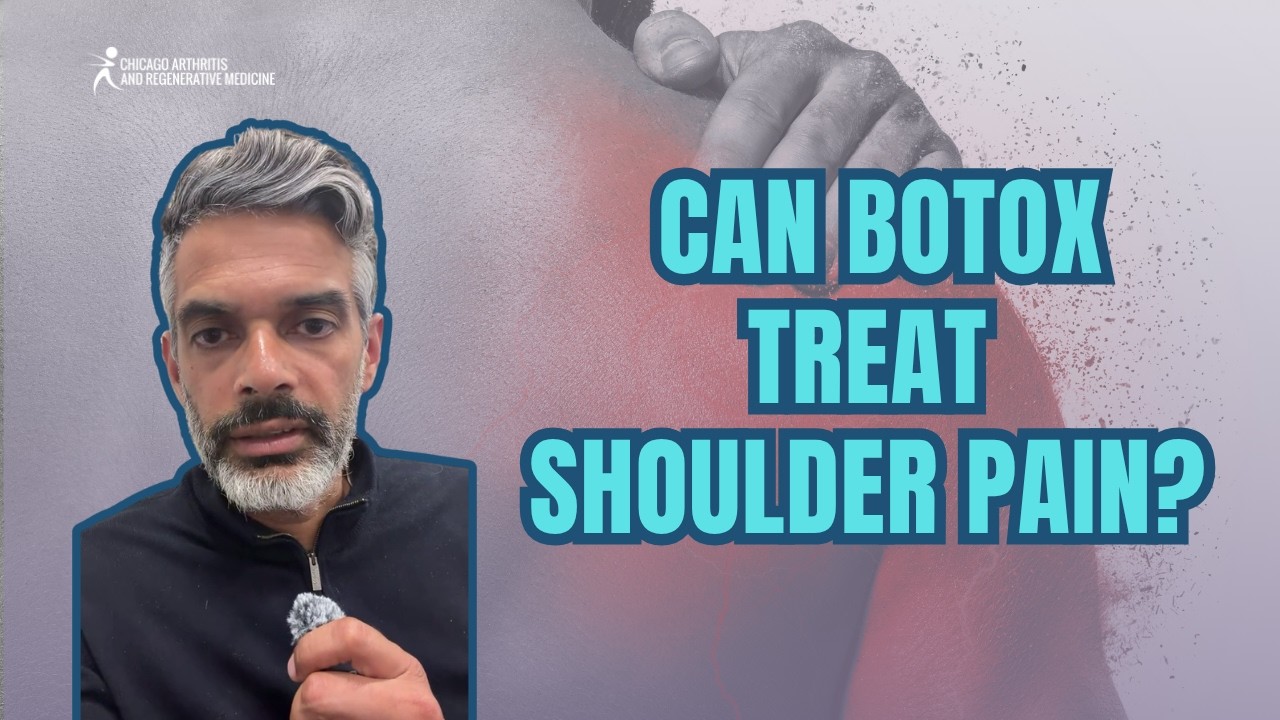
Can Botox Help With Chronic Pain? A Chicago Rheumatologist Explains
If you’ve been struggling with chronic shoulder pain, you may have heard that Botox injections can offer relief. But is that really the best solution — or just a way to mask a deeper problem?
Dr. Siddharth Tambar, a Chicago rheumatologist and regenerative medicine physician at Chicago Arthritis, breaks down what Botox actually does, when it may help, and why finding the root cause of your pain matters more than covering up the symptoms.
What Is Botox and How Does It Work for Pain?
Botox is derived from botulinum toxin. Medically, it works by causing a temporary “chemical denervation” — meaning it temporarily disconnects the nerve signal that controls a muscle.
This is why Botox is commonly used for:
- Muscle spasm conditions
- Certain cosmetic treatments (like reducing forehead wrinkles caused by muscle contraction)
- Some cases of chronic nerve-related pain, such as post-shingles nerve pain
Because Botox reduces muscle activity and nerve hyperexcitability, it can provide real pain relief — but only in specific situations.
When Botox Might Actually Help With Pain
Botox may be a reasonable option if your pain is caused by:
- Chronic muscle spasms
- Nerve-related pain, such as lingering pain after shingles (post-herpetic neuralgia)
In these cases, calming an overactive nerve or muscle can genuinely reduce discomfort.
The Bigger Question: What’s Actually Causing Your Shoulder Pain?
Here’s where things get important.
Many patients seek Botox for chronic shoulder pain, assuming it’s simply a muscle spasm issue. But according to Dr. Tambar, the real question should always be:
“Why does this person have shoulder pain in the first place?”
Shoulder pain and muscle spasm are frequently symptoms of an underlying issue — not standalone problems.
Possible Root Causes of Chronic Shoulder Pain
- Nerve irritation in the neck – Arthritic changes or mild spinal instability in the neck can irritate a nerve, triggering chronic muscle spasm in the shoulder.
- Rotator cuff tendon injuries – Damage to shoulder tendons can cause the surrounding muscles to overcompensate and spasm.
- Chronic ligament instability – A loose or lax ligament can put extra stress on shoulder muscles, leading to ongoing spasm and pain.
If any of these are the true source of your pain, Botox alone treats the symptom — not the cause.
A Smarter Approach to Chronic Shoulder Pain
Instead of jumping straight to Botox, consider addressing the underlying issue first through options like:
- Physical therapy – Targeted strengthening and posture correction
- Ergonomic adjustments – Especially for neck- and nerve-related irritation
- Nerve-targeted injections – To calm irritation at the source
- Regenerative medicine treatments – Such as PRP therapy, which can help address chronic instability in tendons and ligaments
By treating the structural or nerve-related cause, many patients find longer-lasting relief than muscle-masking treatments alone.
The Bottom Line
Botox can help with certain types of pain — primarily muscle spasms and specific nerve conditions. But chronic shoulder pain often stems from deeper issues like:
- Joint instability
- Chronic inflammation
- Nerve irritation from arthritis or spinal changes
Before starting repeated Botox injections, it’s worth getting a proper evaluation to identify — and treat — the actual source of your pain.
Ready to Get to the Root of Your Pain?
At Chicago Arthritis, Dr. Tambar and our team specialize in diagnosing the true cause of chronic joint and muscle pain — using advanced rheumatology and regenerative medicine techniques, including PRP therapy, to help you find lasting relief.
Don’t just mask the pain — treat the source.
👉 Visit ChicagoArthritis.com to learn more or schedule a consultation today.
Treating Shoulder Calcific Tendinitis
How to Tell if You Have a Shoulder Labral Tear and What to Do About It