
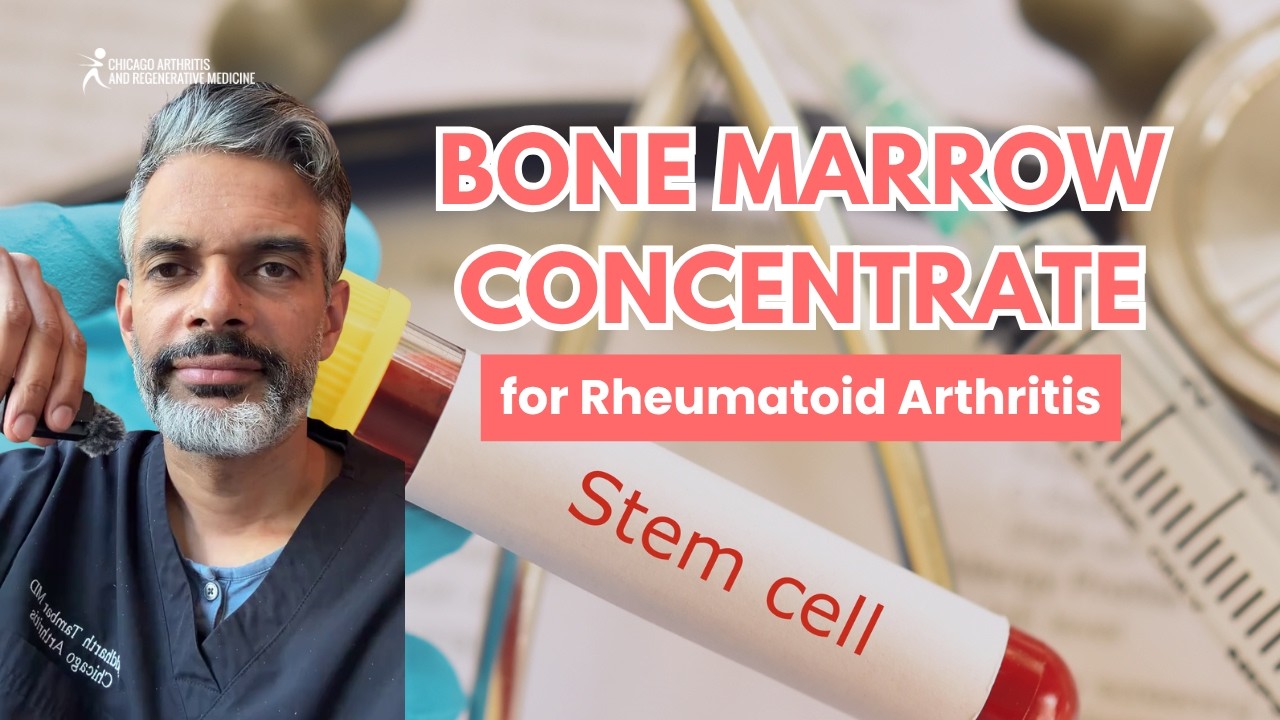
Can Stem Cell Therapy Treat Rheumatoid Arthritis? A Chicago Rheumatologist Explains
If you’re living with rheumatoid arthritis (RA) and constant joint pain, you’ve probably come across headlines about stem cell therapy promising dramatic relief — or even a “cure.” As a Chicago rheumatologist with over 18 years of experience in both rheumatology and regenerative medicine, this is one of the most common questions patients ask me.
So let’s separate the science from the hype: Can stem cells actually treat rheumatoid arthritis, and should they replace your current medication?
Understanding the Difference: RA vs. Osteoarthritis
Before we talk about stem cells, it’s important to understand that rheumatoid arthritis and osteoarthritis are two very different conditions — even though both cause joint pain.
Rheumatoid Arthritis (RA)
RA is an autoimmune disease. Due to a miscommunication in the immune system, your body mistakenly attacks the lining of your joints (and sometimes other organs) the same way it would normally fight off bacteria or viruses.
Osteoarthritis (OA)
Osteoarthritis is a structural joint problem. It involves:
- Cartilage breakdown
- Bone changes
- Joint instability
- General wear-and-tear over time
Because these two conditions have completely different causes, they often require different treatment approaches — and this is where stem cell therapy becomes a much more nuanced conversation.
What Do Stem Cells Actually Do?
Stem cells — specifically mesenchymal stromal cells (MSCs) — have the ability to develop into other cell types and release signals that may influence:
- Inflammation
- Immune system activity
- Tissue repair
This has understandably created excitement about using stem cells for autoimmune conditions like RA.
Can Stem Cells Treat Rheumatoid Arthritis?
Early research suggests that mesenchymal stromal cell therapy may help reduce pain and disease activity in some RA patients. However, there are important limitations to keep in mind:
- Studies are relatively small
- Treatment protocols are not standardized
- The ideal cell source, dosage, and long-term effectiveness are still unknown
- Stem cell therapy has not been proven to prevent joint damage as reliably as established RA medications
Bottom line: At this time, stem cell therapy should not replace disease-modifying antirheumatic drugs (DMARDs) or biologic therapy for active rheumatoid arthritis. If your RA inflammation is active, controlling the autoimmune disease with proven medication remains the priority.
Where Regenerative Medicine Does Have a Role
Here’s where it gets interesting. Even after RA is well-controlled with medication, many patients are left with pain caused by osteoarthritis — structural damage that built up over years of inflammation, joint instability, or normal wear and tear.
This is where a treatment called bone marrow concentrate (BMC) may offer real benefit.
What Is Bone Marrow Concentrate?
Bone marrow concentrate is a regenerative treatment where:
- Bone marrow is drawn from the back of the pelvis
- It’s concentrated in a specialized process
- It’s reinjected directly into the affected joint, bone, and surrounding ligaments
BMC contains a combination of platelets, growth factors, signaling cells, and a small number of mesenchymal stromal cells — all of which may support the body’s natural healing response.
What the Evidence Shows
Current research suggests bone marrow concentrate can:
- Improve pain and function in osteoarthritis, particularly knee osteoarthritis
- Provide relief that can last for several years
- Help slow the progression of wear-and-tear joint damage
It’s important to set realistic expectations, though — BMC is not a way to regrow an entirely new joint, and it does not cure arthritis. Its value lies in addressing the underlying structural damage to reduce pain and improve function.
A Practical Treatment Strategy
For patients dealing with both RA and joint pain, here’s the approach I recommend:
- Control the autoimmune disease first with proven disease-modifying medication
- Identify the source of remaining pain — is it ongoing inflammation, or structural osteoarthritis?
- If inflammation is controlled but osteoarthritis pain remains, bone marrow concentrate may be an appropriate option to explore
The Takeaway
Stem cell therapy is a scientifically fascinating area of research for rheumatoid arthritis, but it is not yet a replacement for proven RA medications. Its more practical, evidence-supported role today is in treating the osteoarthritis that can remain even after autoimmune disease is properly managed.
If you’re dealing with joint pain from RA, osteoarthritis, or both, working with an experienced rheumatology specialist can help you determine the right combination of medication and regenerative treatment options for your specific situation.
Ready to Explore Your Treatment Options?
Whether you’re managing rheumatoid arthritis, exploring regenerative medicine, or looking for relief from chronic joint pain, our team at Chicago Arthritis is here to help.
Visit ChicagoArthritis.com to learn more or schedule a consultation today.
Case Study: Bone Marrow Stem Cells for Knee Arthritis | Chicago Arthritis
Non Surgical treatments for Neck Pain, PRP-Stem cells
Rheumatoid arthritis treatment- when to use PRP and Stem cells.