
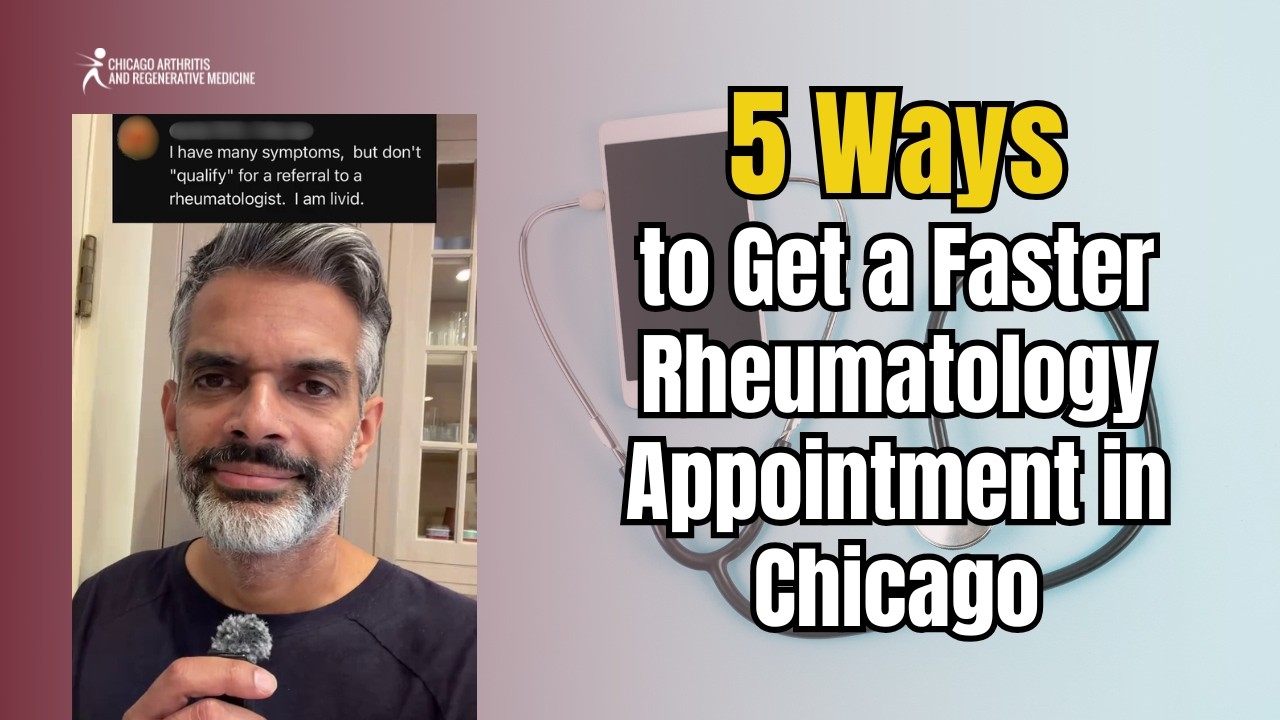
Why Can’t I Get In to See a Rheumatologist? A Chicago Rheumatologist Explains What to Do
If you’ve been trying to get an appointment with a Chicago rheumatologist and keep hitting dead ends, you are not alone. Long wait times, confusing referral processes, and limited insurance networks are leaving thousands of patients with joint pain, swelling, and autoimmune symptoms stuck in limbo — sometimes for six months or longer.
This delay isn’t just frustrating. It can allow inflammation to keep damaging your joints and organs while you wait. Below, we break down why this happens and exactly what you can do about it.
Why Is It So Hard to See a Rheumatologist?
There are several structural reasons patients struggle to access rheumatology specialists, and understanding them can help you navigate the system more effectively.
1. There Simply Aren’t Enough Rheumatologists
The country isn’t training enough rheumatologists to meet demand. This shortage is especially severe in smaller cities, rural areas, and underserved communities, where patients may have to travel long distances just to find a provider.
2. Inefficient Intake Processes
Many specialist offices have overly strict intake requirements before they’ll schedule a new patient. A rheumatologist’s job is to help guide patients — even when their symptoms don’t fit a “textbook” presentation — and to support the primary care doctors who are counting on them for guidance.
3. Poor Scheduling Management
Some offices are booked six months out and don’t have a good system for filling last-minute cancellations. Better cancellation and rescheduling processes could get patients in far sooner.
4. Restrictive Insurance Networks
With so few rheumatologists available nationally, narrow insurance networks make an already difficult situation worse.
5. Gaps in Referral Education
Not every primary care provider is fully informed about which symptoms warrant a rheumatology referral, which can further delay the process.
Why Delayed Diagnosis Is a Serious Problem
If an autoimmune or inflammatory condition goes undiagnosed and untreated, the inflammation doesn’t just sit still — it continues to damage joints and, in some cases, internal organs. The longer the delay, the greater the risk of:
- Permanent joint damage
- Increased pain and disability
- More complex, harder-to-manage disease long term
Getting to a rheumatologist quickly isn’t just about comfort — it’s about protecting your long-term health.
When Should You See a Rheumatologist?
The signs are usually more straightforward than people expect. You should consider a referral if you have:
- Persistent joint pain and swelling lasting a few weeks or more
- Pain lasting more than four weeks that hasn’t improved with rest, physical therapy, or over-the-counter anti-inflammatories
- Unexplained morning stiffness, which the American College of Rheumatology flags as a key warning sign
- Additional symptoms like sun-sensitive skin rashes, psoriasis, or unexplained fatigue
- Positive autoimmune antibody labs combined with symptoms
What If Your Antibody Tests Are Negative?
This is an important point many patients don’t know: a negative antibody test does not rule out an autoimmune condition. Conditions like seronegative arthritis exist and are recognized by rheumatologists. If your primary care doctor dismisses your symptoms because of a negative lab result, it’s worth specifically asking about this possibility.
What to Tell Your Primary Care Doctor
To help move your referral along, be specific and thorough when describing your symptoms. Mention:
- Significant pain, swelling, or stiffness
- Any skin changes (rashes, psoriasis, sun sensitivity)
- Fatigue or other systemic symptoms
- Any lab work you’ve already had done, including antibody results
Giving your doctor the full picture helps them understand the scope of what’s going on — and makes it more likely they’ll prioritize your referral.
How to Get In to See a Rheumatologist Faster
If you’re facing a long wait list, here are practical steps that can help:
- Have your primary doctor’s office call the specialist directly to request an earlier appointment — many offices will accommodate this.
- Ask to be placed on a cancellation list so you can be seen sooner if another patient reschedules.
- Check with your insurance company for additional in-network rheumatology providers.
- Consider out-of-network providers if in-network options are limited.
- Explore telehealth options. If you have internet access, you have access to rheumatologists far beyond your zip code — including specialists in other cities, states, or even countries who can help with evaluation and, in many cases, treatment.
You Don’t Have to Wait in Silence
Poor access to rheumatologic care is a real structural problem — and you shouldn’t have to suffer because of it. Whether it’s advocating more assertively with your primary care doctor, getting on a cancellation list, or exploring telehealth, there are steps you can take today to move your care forward.
Get Expert Rheumatology & Regenerative Medicine Care in Chicago
At Chicago Arthritis, we specialize in diagnosing and treating arthritis, autoimmune disease, and chronic joint pain — combining traditional rheumatology specialist care with advanced options like PRP therapy and other regenerative medicine treatments for osteoarthritis treatment and chronic pain management.
If you’re struggling with unexplained joint pain, swelling, or an autoimmune condition and can’t get the answers you need, don’t wait for your symptoms to get worse.
👉 Visit ChicagoArthritis.com today to learn more or schedule a consultation with our team.
What Are Biologic Medications in Rheumatology? How They Work & When You Need Them
What to Expect at Your First Rheumatology Appointment: A Patient’s Guide
What’s the Difference Between a Rheumatologist and an Orthopedic Doctor?