
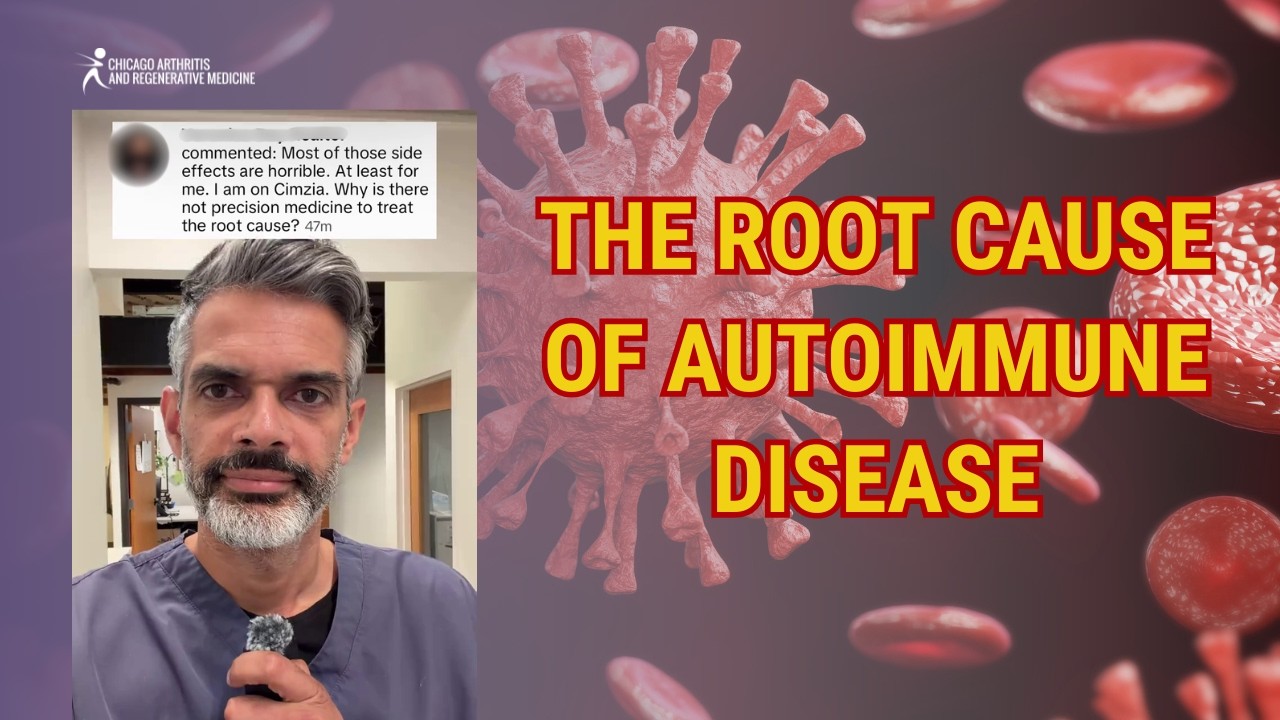
What Really Causes Autoimmune Disease? A Chicago Rheumatologist Explains
If you’ve recently been diagnosed with an autoimmune disease, chances are you’ve asked yourself: “Why did this happen to me?”
It’s one of the most common questions patients bring to our office. And the honest answer is this: autoimmune disease rarely has a single root cause. The immune system is remarkably complex, with built-in redundancies and multiple layers of regulation — which makes pinpointing “the one thing that caused it” nearly impossible.
As a Chicago rheumatologist specializing in regenerative medicine, I want to walk you through what we actually know about why autoimmune conditions develop, and why there’s rarely one simple answer.
Understanding Molecular Mimicry
One of the key concepts behind autoimmune disease is something called molecular mimicry.
Here’s how it works:
- Your immune system constantly reads and reacts to proteins from viruses, bacteria, and other outside threats.
- Sometimes, a protein from an infection closely resembles a protein found naturally in your own body.
- Your immune system attacks the infection — but in doing so, some immune cells may mistakenly target your own tissue too.
This is your immune system operating in “read and react” mode: recognize a foreign substance, remember it, and attack again if it reappears. That aggressiveness is exactly what protects you from bacteria and viruses. But when it’s aimed at your own body, it becomes a problem.
Why Doesn’t Everyone Develop Autoimmune Disease?
Here’s an important point many patients don’t realize: some degree of self-reactivity happens in everyone. Yet most people never develop an autoimmune condition.
Why? Because a healthy immune system has built-in safeguards known as immune tolerance.
How Immune Tolerance Works
Immune tolerance is your body’s ability to recognize its own tissue and avoid attacking it. This happens in a few ways:
- The thymus gland removes many potentially harmful immune cells early in their development.
- Regulatory T cells (T-reg cells) act like the brakes on your immune system, keeping aggressive immune responses in check.
Autoimmune disease can begin to develop when those “brakes” stop working properly.
So What Actually Triggers Autoimmune Disease?
This is where things get complicated — and where the idea of a single root cause breaks down.
Autoimmune disease typically develops from a combination of factors, including:
- Genetics – Some people are simply more genetically susceptible.
- Infections – Certain viral or bacterial infections may trigger molecular mimicry.
- Smoking and environmental exposures
- Hormonal changes
- Certain medications
- Changes in the gut microbiome
Individually, none of these factors may be enough to cause disease. But over time, they can accumulate — gradually wearing down immune tolerance until it finally breaks.
The Real Root Cause: A Combination, Not a Single Trigger
If there’s one takeaway, it’s this: autoimmune disease results from a combination of genetic susceptibility, immune triggers, and a breakdown in immune regulation — not one isolated event.
We know that can feel frustrating. It’s natural to want a single answer, one thing to point to or remove. But understanding this complexity also brings something important:
This is not your fault.
You did not cause your autoimmune disease because of one meal, one stressful week, or one mistake. The immune system is extraordinarily intricate, and medical understanding of it continues to evolve every year.
What This Means for the Future of Treatment
Traditionally, autoimmune disease has been managed primarily through immune suppression. But as our understanding deepens, the future of treatment is shifting.
Rather than simply suppressing the immune system, emerging approaches focus on:
- Retraining the immune system
- Restoring immune tolerance
- Supporting the body’s natural regulatory mechanisms
This is where the field of regenerative medicine is opening new doors for patients who haven’t found relief through conventional treatment alone.
Get Personalized Care from a Chicago Rheumatology Specialist
Autoimmune disease is complex — but you don’t have to navigate it alone. At Chicago Arthritis, we specialize in rheumatology and regenerative medicine, helping patients understand their diagnosis and explore treatment options tailored to their unique immune profile.
If you’re dealing with joint pain, chronic inflammation, or an autoimmune condition, our team is here to help you find real answers and a path forward.
👉 Learn more or schedule a consultation today at ChicagoArthritis.com
Long-Term vs Short-Term Steroid Use in Autoimmune Conditions
Steroids for Rheumatoid Arthritis: Quick Relief or Long-Term Harm?