
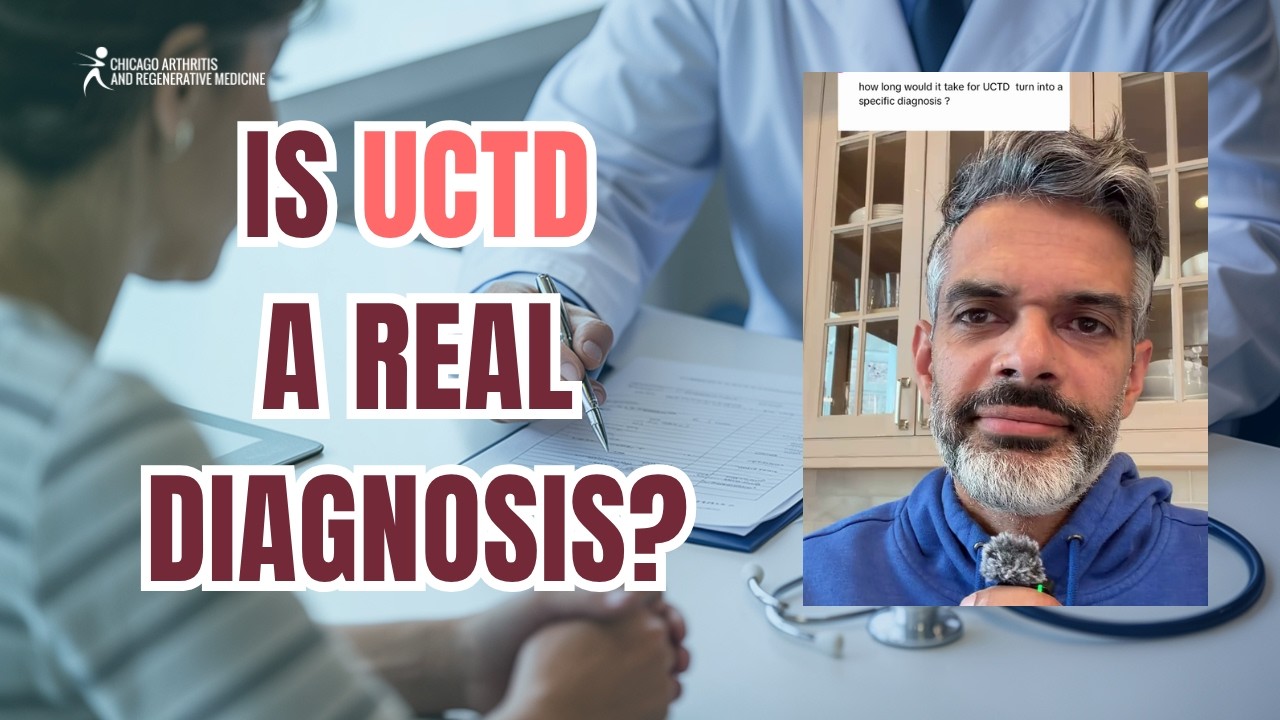
Is UCTD a Real Diagnosis? What Chicago Patients Need to Know About Undifferentiated Connective Tissue Disease
If you’ve been told you have Undifferentiated Connective Tissue Disease (UCTD), you may be wondering: Is this a real condition, or am I just waiting to be diagnosed with lupus or rheumatoid arthritis?
It’s a fair question — and one patients ask often. The good news is that UCTD is a legitimate, well-recognized autoimmune diagnosis, not a placeholder or a “wait and see” label. Here’s what it actually means, why it happens, and how it’s treated.
What Is Undifferentiated Connective Tissue Disease?
UCTD occurs when your immune system is causing autoimmune symptoms, but your presentation doesn’t fully meet the diagnostic criteria for a specific condition such as:
- Lupus
- Rheumatoid arthritis
- Sjögren’s syndrome
- Scleroderma
This is more common than many people realize. Autoimmune diseases exist on a spectrum, and not everyone fits neatly into one diagnostic category.
Why Rheumatologists Use UCTD as a Diagnosis
Rather than dismissing patients who don’t check every box for a specific disease, rheumatology has developed classification criteria — like UCTD — to ensure people with real autoimmune activity still get recognized and treated appropriately.
Why Can’t Doctors Give a More Specific Diagnosis?
Conditions like lupus and rheumatoid arthritis are diagnosed using established classification criteria. These criteria exist to:
- Ensure diagnostic accuracy
- Guide appropriate treatment decisions
- Support consistency across research and clinical care
Some patients have symptoms such as:
- Joint pain
- Raynaud’s phenomenon
- A positive ANA or other autoimmune antibodies
- Fatigue
- Skin rashes
…but not quite enough features to confidently confirm lupus or another specific autoimmune disease. That’s where UCTD comes in.
Will UCTD Eventually Become a Specific Diagnosis?
Maybe — but often not.
- Some patients remain classified as UCTD for years, or even permanently.
- Some go into remission.
- Others gradually develop additional symptoms or lab findings that allow for a more specific diagnosis — this evolution is most likely to happen within the first few years after symptoms begin.
Because autoimmune conditions can change over time, regular follow-up with a rheumatologist is essential. Ongoing monitoring allows your care team to catch and respond to any shifts in your condition early.
How Is UCTD Treated?
Here’s the most important part: a UCTD diagnosis does not mean your symptoms are ignored.
Treatment is based on your active symptoms and disease activity — not just the label on your chart. The goals of treatment are to:
- Control inflammation
- Relieve symptoms
- Reduce the risk of disease progression when appropriate
Common Treatment Approaches
Rheumatologists often use the same disease-modifying antirheumatic drugs (DMARDs) for UCTD as they do for other autoimmune conditions, depending on your specific symptoms:
- Hydroxychloroquine or methotrexate — often used for joint or skin involvement
- Other disease-modifying treatments — considered if additional organs are affected
The key principle: your care is guided by what’s actually happening in your body, not simply by which diagnostic category you fall into.
The Bottom Line on UCTD
UCTD is a real, recognized autoimmune condition — not a placeholder or a “not sure yet” diagnosis. Some patients eventually develop a more clearly defined autoimmune disease. Many never do. Either way, the priority is the same:
- Treat the disease you have today
- Monitor closely for any changes over time
- Work with a rheumatologist who understands the full spectrum of autoimmune disease
Concerned About Joint Pain or Autoimmune Symptoms? We Can Help.
If you’re experiencing unexplained joint pain, fatigue, rashes, or other symptoms that suggest autoimmune activity, don’t wait for a “perfect” diagnosis to seek care. Our Chicago rheumatology team specializes in identifying and treating autoimmune and connective tissue conditions at every stage — including UCTD.
Learn more or schedule a consultation today at ChicagoArthritis.com.
UCTD vs MCTD: What’s the Difference? Autoimmune clarity from a Rheumatologist
Why Does the Body Attack Itself in Autoimmune Conditions
Autoimmune Medications and Regenerative Medicine: Can They Work Together?