
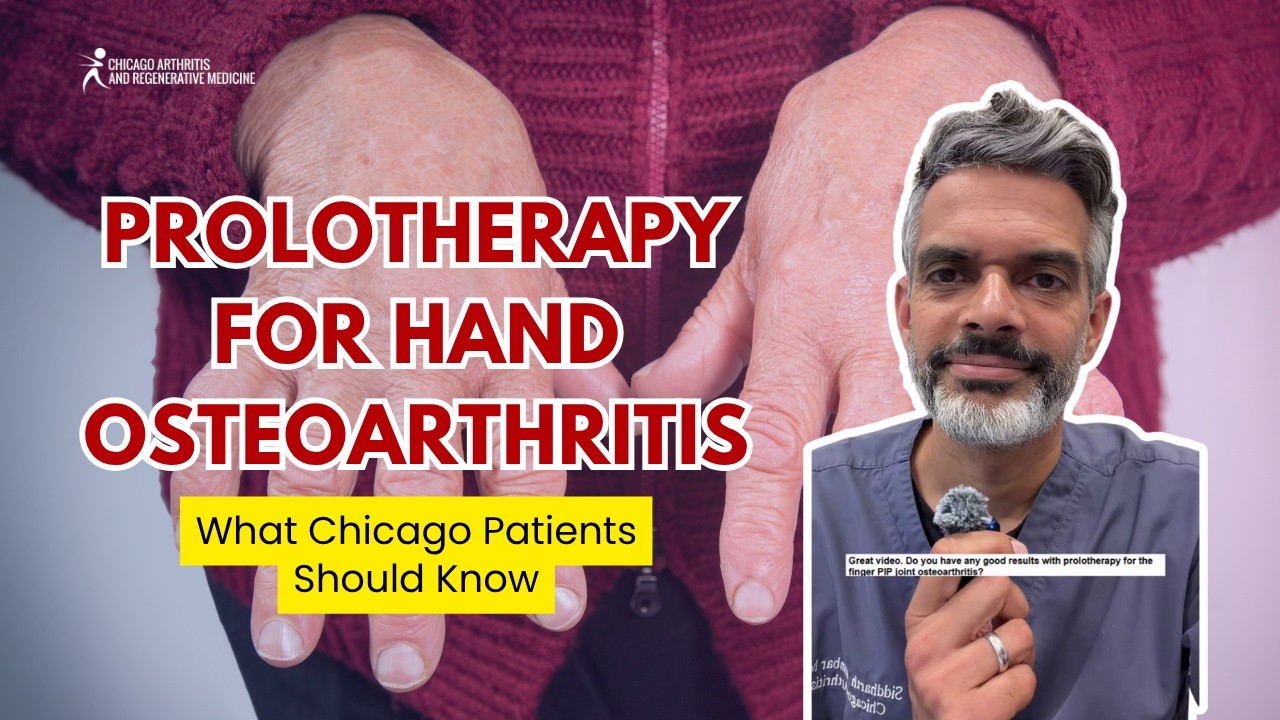
Why Hand Arthritis Isn’t Just “Wear and Tear” — And What You Can Do About It
If you’ve been told your hand osteoarthritis is simply a result of aging or overuse, there’s more to the story. According to Dr. Siddharth Tambar, a Chicago rheumatologist and regenerative medicine specialist, joint instability plays a major role in the development and progression of arthritis — and understanding this can open the door to more effective, longer-lasting treatment options.
What Really Causes Osteoarthritis in the Hands?
Osteoarthritis, also known as degenerative joint disease, is often thought of as simple cartilage breakdown over time. But there’s an important underlying factor: instability.
At some point, most people strain or sprain a ligament in a joint. When that ligament doesn’t fully heal, it leaves the joint slightly unstable. Over months and years, this instability can gradually lead to progressive arthritis.
Key takeaway: If instability is the root cause, then effective treatment needs to address instability — not just manage pain.
How Regenerative Medicine Targets the Real Problem
This is where regenerative medicine treatments come in. Rather than simply masking symptoms, these therapies work to strengthen the ligaments and soft tissue structures surrounding the joint. This approach can lead to:
- Better long-term function
- More durable pain relief
- Improved joint stability over time
Dextrose Prolotherapy: A Gentle Starting Point
Dextrose prolotherapy is one of the mildest regenerative medicine options available. Here’s how it works:
- A low concentration of dextrose (sugar water) is injected into the affected area
- This creates a mild, temporary inflammatory response
- Over time, this response helps strengthen the ligament and improve joint stability
Treatments are typically spaced about one month apart, with slow, progressive improvement after each session.
Matching Treatment Strength to Severity
Not every case of hand arthritis is the same, and treatment options exist on a spectrum:
- Dextrose Prolotherapy – best for mild to moderate arthritis
- Platelet-Rich Plasma (PRP) Therapy – suited for moderate to more advanced degeneration
- Bone Marrow Concentrate – reserved for more advanced cases
Your rheumatology specialist can help determine which option fits your specific condition.
Why Precision Matters: The Role of Ultrasound Guidance
The joints in the hand are small — so small that some are informally referred to as “virtual joints” due to how difficult they are to access accurately. However, with proper ultrasound guidance, these joints can be treated with real precision.
Without image guidance, injections risk missing the joint entirely, reducing effectiveness. This is why choosing a provider experienced in ultrasound-guided regenerative medicine is essential for optimal results.
What Results Can You Expect?
Unlike steroid injections, which offer fast relief that tapers off quickly, regenerative treatments work more gradually — because they’re addressing the underlying cause.
- Dextrose Prolotherapy: Early improvement around the one-month mark, with progressive gains over several months as treatments continue
- PRP and Bone Marrow Concentrate: Early improvement at one month, with continued improvement over the following 6–12 months
This progressive healing pattern reflects real tissue repair, not just temporary symptom control.
Is Dextrose Prolotherapy Right for You?
For patients dealing with mild to moderate hand osteoarthritis, dextrose prolotherapy can be a reasonable next step. It offers:
- A gentle, low-risk treatment approach
- Gradual pain relief
- Improved joint function over time
Take the Next Step Toward Joint Health
Hand arthritis doesn’t have to mean giving up the activities you love. By addressing joint instability at its source, regenerative medicine offers a path toward lasting relief and improved function.
Ready to learn more about your treatment options? Visit ChicagoArthritis.com to schedule a consultation with our rheumatology and regenerative medicine specialists today.
Rheumatoid Arthritis vs Osteoarthritis- What is the difference?
Treating Osteoarthritis and Knee Pain with Regenerative Medicine
Who Should You Consult for Osteoarthritis? Discover the Specialists You Need to Know