
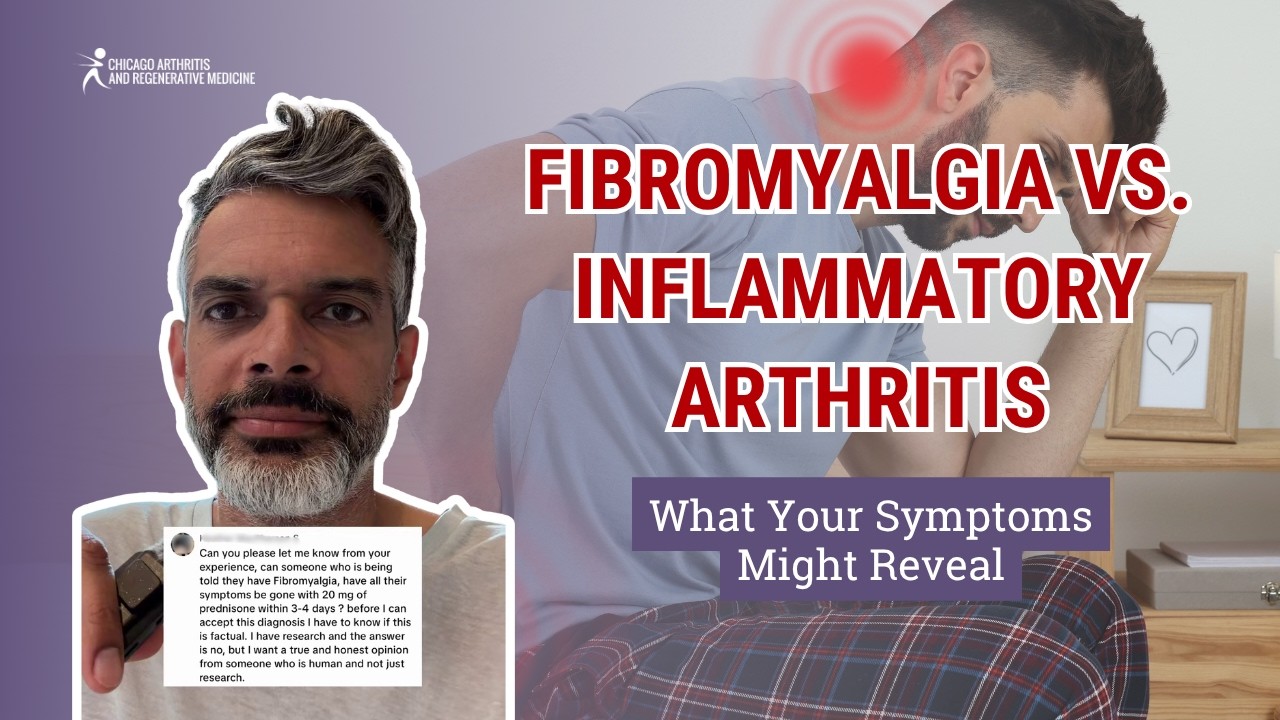
Told You Have Fibromyalgia? Why Feeling Better on Steroids Could Mean There’s More to Your Diagnosis
If you’ve been diagnosed with fibromyalgia but noticed dramatic pain relief after taking prednisone or another steroid, you’re not imagining things — and it’s worth paying attention to. This response can be an important clue that your doctor shouldn’t ignore.
At Chicago Arthritis, we regularly see patients whose symptoms don’t perfectly match a single diagnosis. Understanding why your body responded the way it did can help you get closer to the right answer — and the right treatment.
What Is Fibromyalgia, Really?
Fibromyalgia is a condition where your body’s pain-processing system becomes overly sensitized. Think of it like a volume knob for pain that’s been turned up too high — even when there’s no actual injury or tissue damage.
Common symptoms include:
- Widespread, generalized pain
- Significant tenderness in the muscles
- Persistent fatigue
- “Non-restorative sleep” — waking up exhausted even after a full night’s rest
Because fibromyalgia isn’t driven by inflammation, it’s classified differently than conditions like rheumatoid arthritis or osteoarthritis.
What Does Prednisone Actually Do?
Prednisone is a corticosteroid — a powerful anti-inflammatory and immunosuppressive medication. Physicians typically prescribe it short-term to calm down significant inflammation in the body.
Since prednisone specifically targets inflammation, it generally isn’t used — or expected to help — for non-inflammatory conditions.
So Why Would Fibromyalgia Symptoms Improve on Steroids?
Here’s where it gets interesting. Research shows that steroids are not generally an effective treatment for fibromyalgia. However, one study did find a specific subgroup of patients who did respond to steroids — and they had one thing in common: elevated CRP (C-reactive protein), a key marker of inflammation in the body.
This finding matters because it suggests that if your fibromyalgia symptoms dramatically improved on steroids, there may be an inflammatory process happening alongside — or instead of — fibromyalgia.
Could You Have More Than One Condition?
It’s entirely possible to have overlapping conditions. Patients can experience fibromyalgia together with:
- Rheumatoid arthritis
- Ankylosing spondylitis
- Other inflammatory arthritis conditions
- Osteoarthritis with a fibromyalgia overlay
This is why a thorough rheumatology evaluation matters — symptoms can blend together, making it harder to identify everything that’s contributing to your pain.
When Your Doctor Should Take a Second Look
If you’ve been told you have fibromyalgia but experienced significant relief from steroids, this is a moment for your physician to pause and ask:
- Is there an inflammatory condition that hasn’t been identified yet?
- Do your symptoms suggest something beyond myofascial pain?
- Could inflammatory markers like CRP reveal a hidden piece of the puzzle?
It’s also worth noting that steroids can help with certain non-inflammatory issues too — for example, replacing low cortisol levels in patients with adrenal insufficiency. This is another reason a broader evaluation is so important.
The Bottom Line
Fibromyalgia typically should not respond dramatically to steroids. If yours did, it doesn’t necessarily mean your diagnosis is wrong — but it does mean it may be incomplete. A deeper look at your symptoms and inflammatory markers could reveal an additional condition that needs its own treatment plan.
Ready for Answers? Talk to a Chicago Rheumatologist
At Chicago Arthritis, our team specializes in getting to the root of complex, overlapping pain conditions — combining expert rheumatology care with advanced regenerative medicine options like PRP therapy to help you feel better, not just manage symptoms.
Don’t settle for an incomplete diagnosis. Visit ChicagoArthritis.com to learn more or schedule a consultation today.
Rheumatoid Arthritis vs. Fibromyalgia: What’s Really Causing Your Chronic Pain?