
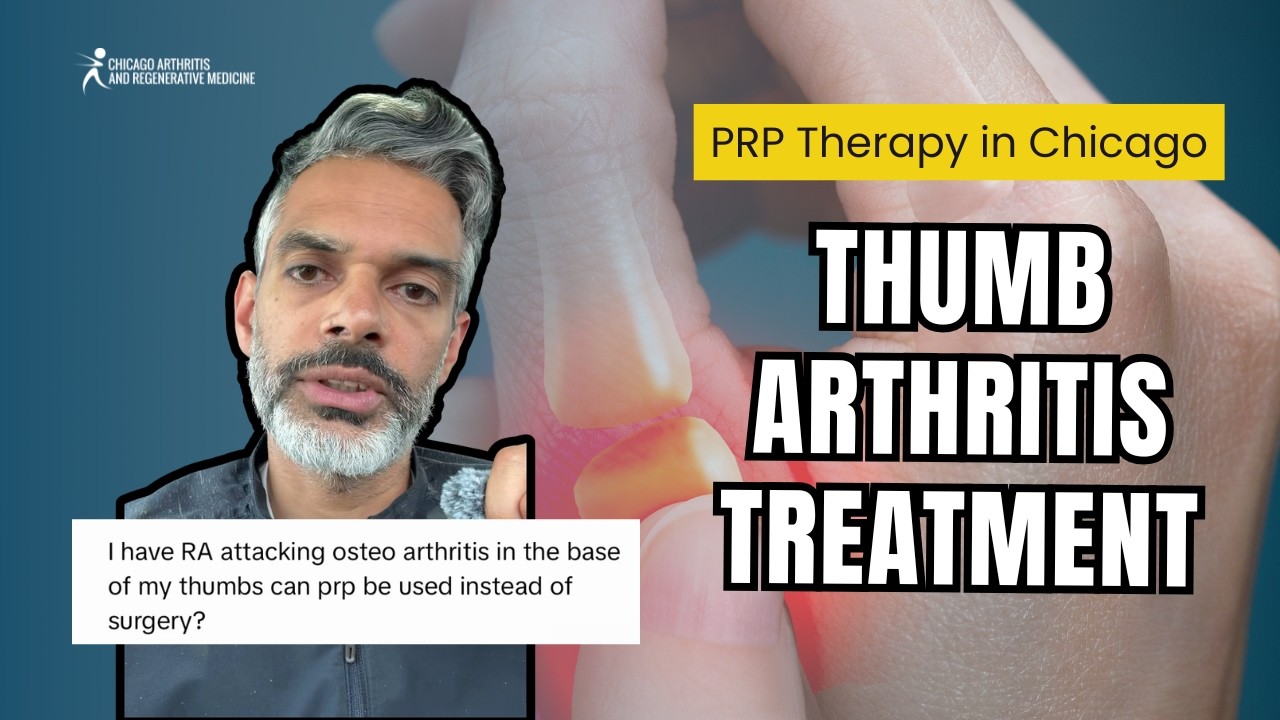
Thumb Arthritis Got You in a Grip? How PRP Therapy Can Help
If the base of your thumb aches every time you twist a jar lid, turn a key, or grip your phone, you’re not imagining it. This small but mighty joint — called the first CMC joint — is one of the most common places for osteoarthritis to strike, especially as we age or after years of repetitive hand use.
The good news? You have more options than rest, splints, and steroid shots. At Chicago Arthritis, we specialize in regenerative medicine in Chicago, including PRP therapy, to help patients find longer-lasting relief from thumb arthritis pain.
What Is First CMC Joint Osteoarthritis?
The first carpometacarpal (CMC) joint sits at the base of your thumb. It’s essential for pinching, gripping, and nearly everything you do with your hands.
Osteoarthritis here is largely a problem of joint instability. Over time — due to injury, overuse, or repetitive strain — the ligaments that stabilize this joint can weaken or loosen. That instability leads to:
- Cartilage breakdown
- Inflammation
- Pain and stiffness
- Reduced grip strength
Traditional Treatments for Thumb Arthritis
Most patients start with conservative options, including:
- Activity modification and rest
- Thumb splinting for support
- Hand therapy to improve mechanics and strength
- Steroid injections for short-term pain relief
Steroid injections can help, but they come with a catch. Repeated use can weaken ligaments further, damage bone over time, and increase the risk of infection or other complications. They’re a useful bridge — not a long-term solution.
PRP Therapy: A Regenerative Option for Thumb Arthritis
Platelet-rich plasma (PRP) therapy offers a different approach. Here’s how it works:
- A small sample of your own blood is drawn
- The blood is processed to concentrate the platelets
- This platelet-rich solution is injected into the joint and surrounding ligaments
Because PRP uses your body’s own healing components, it works with your tissue rather than just masking symptoms.
Who Is a Good Candidate for PRP?
PRP tends to work well for mild to moderate osteoarthritis of the thumb. For more advanced cases, results can be less predictable, and some patients may need bone marrow concentrate instead — a stronger regenerative option that includes stem cells in addition to platelets.
PRP vs. Steroid Injections: What’s the Difference?
| Treatment | Onset | Duration |
|---|---|---|
| Steroid injection | Fast (days) | A few weeks to a few months |
| PRP therapy | Gradual (starts ~1 month) | 6-12+ months, sometimes longer |
While steroids act quickly and fade fast, PRP takes longer to kick in — but tends to provide relief that lasts significantly longer. That’s because PRP doesn’t just reduce inflammation; it also helps strengthen the ligaments supporting the joint, improving both pain and hand function over time.
What to Look for in a PRP Provider
Not all PRP treatments are created equal. If you’re considering this option for thumb arthritis, here’s what a skilled rheumatology specialist should be doing:
1. Identify All the Structures Involved
The first CMC joint is often the main culprit, but your doctor should also evaluate:
- The triscaphe joint
- The wrist joint
- The median nerve (carpal tunnel can mimic or worsen thumb pain)
2. Use a Comprehensive, Prolotherapy-Style Approach
Injecting the joint alone often isn’t enough. Effective treatment should also target the capsular ligaments surrounding the joint, along with any other structures contributing to your pain.
3. Use Image Guidance — Every Time
The first CMC joint is tiny. Precision matters. Ultrasound guidance (not just X-ray) allows your physician to place the injection accurately, down to the millimeter, especially when treating ligaments or nearby nerves.
4. Use a High Concentration of Platelets
Not all PRP is equally potent. A general rule of thumb: your provider should be drawing at least 5-6 tubes of blood to produce a high-concentration PRP sample. Low tube counts typically mean a weaker, less effective treatment.
Why Choose Chicago Arthritis for Regenerative Medicine
At Chicago Arthritis, our approach to arthritis treatment in Chicago combines advanced imaging, precise technique, and a deep understanding of joint mechanics. Whether you’re dealing with osteoarthritis, an autoimmune disease, or another source of chronic pain, our goal is to help you move — and live — with less pain.
Take the Next Step Toward Pain-Free Hands
Thumb arthritis doesn’t have to control your daily life. If you’re looking for joint pain relief through PRP therapy or want to learn whether regenerative medicine is right for you, our team is here to help.
Visit ChicagoArthritis.com to learn more or schedule a consultation with our rheumatology specialists today.
What’s Causing Your Thumb Pain?