
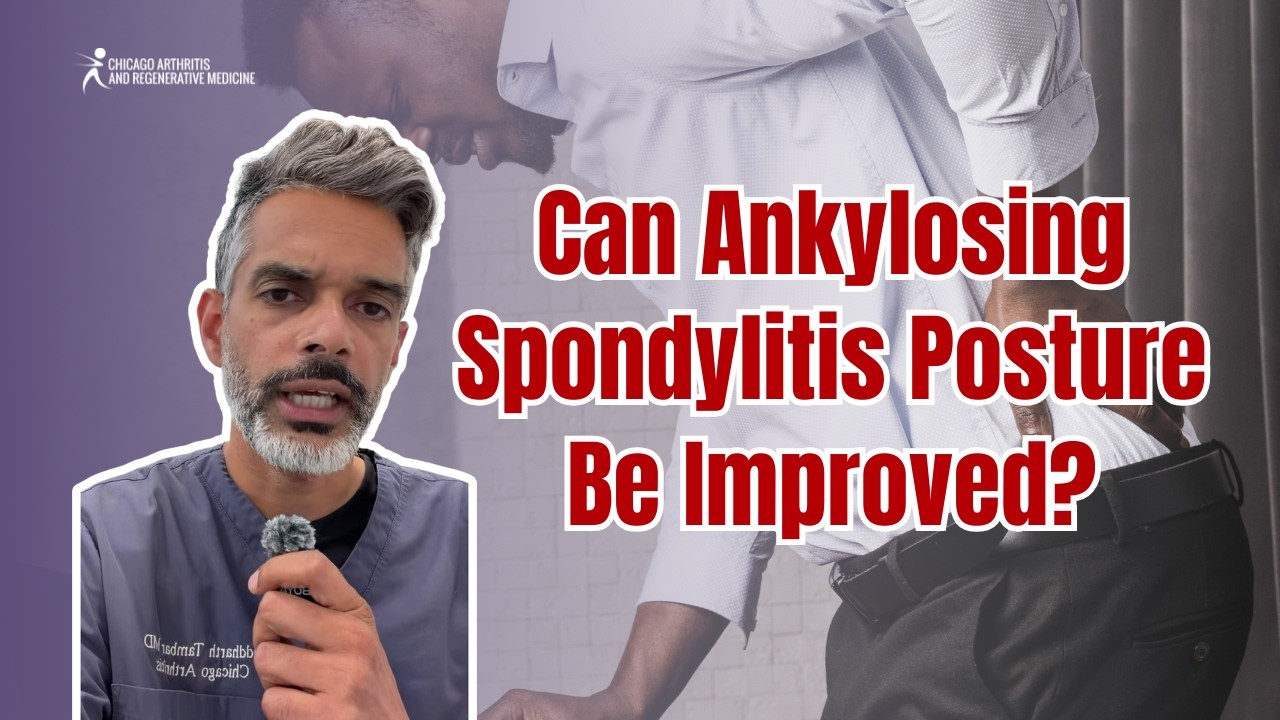
Can You Fix a Stooped Posture from Ankylosing Spondylitis? A Chicago Rheumatologist Explains
Living with ankylosing spondylitis (AS) for years — or even decades — can lead to real, visible changes in your posture. If you’re one of the many patients dealing with a progressively stooped spine, you may be wondering: is it too late to do anything about it?
The good news is that while a severely fused spine can’t be fully reversed, there are meaningful, evidence-based ways to improve pain, function, and even posture. Here’s what our team at Chicago Arthritis wants you to know.
What Is Ankylosing Spondylitis?
Ankylosing spondylitis is a chronic inflammatory arthritis condition that primarily affects the spine. Left uncontrolled, it can cause the vertebrae to fuse together over time, leading to:
- Progressive disability
- Chronic pain
- Reduced mobility
- In severe cases, a significant stooped posture
If you’re dealing with any of these symptoms, know that you’re not alone — and you still have options.
Is Surgery the Only Option for Severe Cases?
For patients with significant spinal fusion, surgical osteotomy — a procedure that involves cutting the bone to help correct posture — is sometimes considered. However, this is not a low-risk procedure.
Before considering surgery, it’s important to first maximize all non-surgical treatment options, which tend to carry less risk and often provide better long-term results.
Medical Management Still Matters, Even in Advanced AS
Here’s something many patients don’t realize: even in advanced ankylosing spondylitis, there is often still an active inflammatory component that can be treated.
Biologic medications can still help with:
- Pain reduction
- Improved function
- Slowing further progression
If your current treatment plan hasn’t been optimized, it’s absolutely worth revisiting with a rheumatology specialist.
The Power of Structured Exercise
As AS progresses, stiffness and fusion can make movement more difficult — which is exactly why a structured exercise program becomes so important.
Why Exercise Matters for AS Patients
- Range of motion exercises help combat stiffness before it worsens
- Strength training counteracts the weakness that develops from reduced activity
- Working with a physical therapist or a posture correction specialist (such as an Egoscue-trained therapist) can provide guided, safe progress
Chronic pain often leads to less movement, which leads to more weakness — creating a cycle that structured exercise can help break.
Complementary Therapies That May Help
Beyond medication and exercise, several complementary treatments may support pain relief and function in AS patients:
Platelet-Rich Plasma (PRP) Therapy
Some studies show PRP therapy can help with sacroiliac (SI) joint pain in ankylosing spondylitis patients — but only if the SI joints are not completely fused. If there’s still access to the joint, PRP may offer real benefit for pain and function.
Acupuncture
Research has shown acupuncture can help improve both pain and function in AS patients. Even small functional improvements can support better posture over time.
Dry Needling
Often used alongside physical therapy, dry needling doesn’t have as much specific research in AS but can still be a helpful complementary approach.
Massage Therapy & Shockwave Therapy
These can help address muscle tension and myofascial pain, which may in turn support modest posture improvements.
A Word of Caution: Chiropractic Care
High-velocity spinal adjustments should be approached very carefully in AS patients. Because AS can lead to spinal fusion and increased fracture risk, aggressive chiropractic techniques carry additional risk and should only be considered with caution and physician guidance.
Setting Realistic Expectations
If you have chronic, advanced ankylosing spondylitis, it’s important to have realistic expectations. A stooped posture may not be fully correctable — but even a 20% improvement in posture, pain, or function can make a meaningful difference in your daily quality of life.
The Bottom Line
- Medical management can still help, even in advanced disease
- Structured exercise is key to preserving function
- Complementary therapies like PRP and acupuncture may offer added relief
- Realistic, incremental improvement can significantly boost quality of life
Take the Next Step in Your AS Care
You don’t have to accept chronic pain and reduced mobility as your “new normal.” Whether you’re newly diagnosed or have been managing ankylosing spondylitis for years, there may be more options available to you than you think.
Visit ChicagoArthritis.com to learn more about our comprehensive approach to arthritis care, regenerative medicine, and rheumatology services in Chicago — and schedule a consultation today.
How Ankylosing Spondylitis Differs in Men and Women
Medications for Ankylosing Spondylitis: What You Need to Know (Best Treatments & FAQs Answered!)
The Best Exercises for Ankylosing Spondylitis: Stay Active and Reduce Pain