
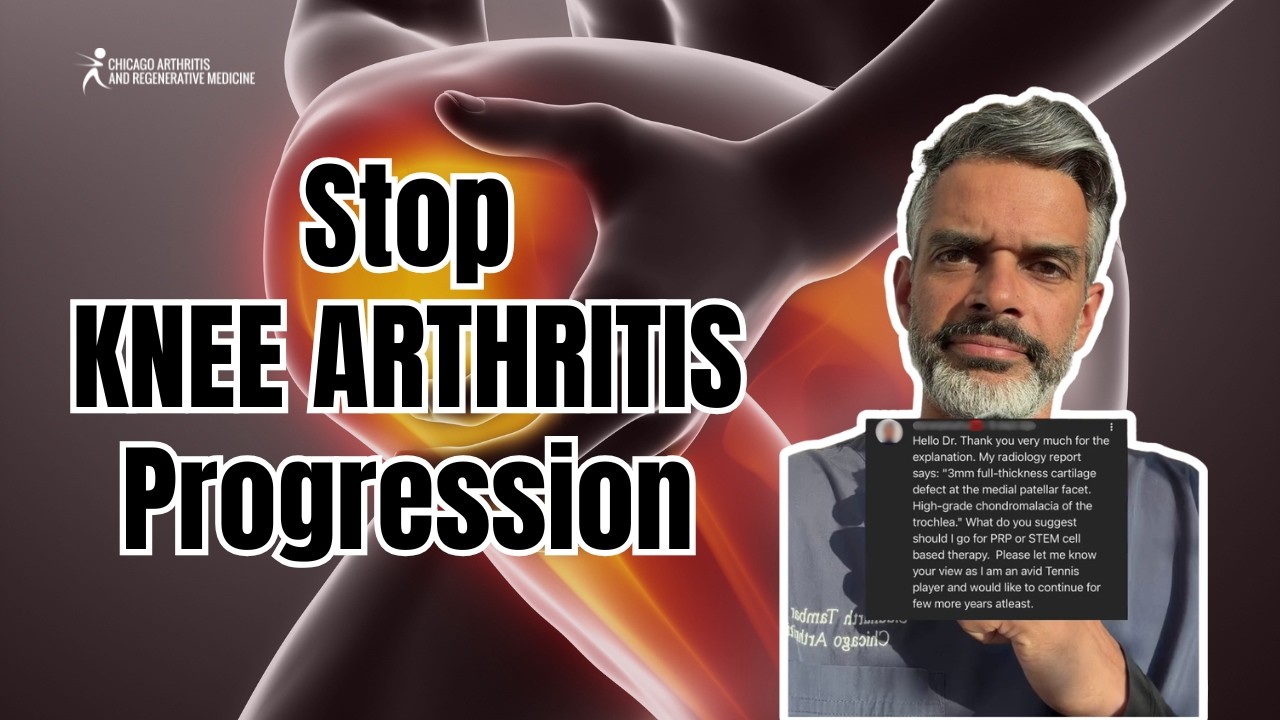
Can You Stop Knee Arthritis From Getting Worse? A Chicago Rheumatologist Explains
If you’re living with knee osteoarthritis, you’ve probably asked, “How do I get rid of this pain?” But there’s a more important question that often gets overlooked:
How do I stop this from getting worse?
At Chicago Arthritis, we believe treating knee arthritis isn’t just about short-term relief — it’s about protecting your joint health for years to come. Here’s what you need to know.
What Causes Knee Osteoarthritis to Progress?
Knee osteoarthritis isn’t just a “broken part” that stays the same. It’s a dynamic, progressive process driven largely by joint instability.
Here’s how it typically develops:
- A ligament strain or sprain occurs (sometimes years earlier)
- The joint becomes slightly unstable
- Instability leads to gradual breakdown of tendons and soft tissue
- Stress increases on the cartilage and bone
- Cartilage and bone damage accelerate, worsening arthritis over time
Understanding arthritis as a process, not a fixed diagnosis, is key to treating it effectively.
Regenerative Medicine for Knee Pain Relief
Regenerative treatments use your body’s own healing components to reduce pain and improve function. Two common options include:
Platelet-Rich Plasma (PRP) Therapy
PRP uses concentrated platelets from your own blood to:
- Reduce inflammation
- Support ligament and joint stability
- Improve pain during activity
Typical benefit: Pain relief and improved function for 1–2 years
Bone Marrow Concentrate Therapy
This treatment uses your own bone marrow, rich in platelets and stem cells, to support joint stability and reduce inflammation.
Typical benefit: Pain relief and improved function for 3–5 years
Both options are excellent for improving daily comfort and quality of life.
The Bigger Question: Can Arthritis Progression Be Prevented?
Historically, most osteoarthritis treatments — including PRP and bone marrow injections into the joint or ligaments — have focused on pain relief, not stopping disease progression.
But new research is changing that.
A Breakthrough in Disease-Modifying Arthritis Treatment
Research from French orthopedic surgeon Dr. Philippe Hernigou demonstrates that injecting bone marrow concentrate directly into the subchondral bone (the bone beneath the arthritic joint surface) may do more than relieve pain.
This approach has shown potential to:
- Slow or prevent structural progression of arthritis (confirmed via imaging)
- Reduce the likelihood of needing knee replacement surgery
- Provide long-term functional improvement
This is considered a true disease-modifying treatment — a significant advancement, since osteoarthritis has historically lacked treatments that alter its long-term course.
Why This Changes the Conversation for Patients
For patients with moderate knee osteoarthritis, this shifts the discussion from:
“How do we manage your pain?”
to:
“How do we protect your knee and prevent surgery for the next 10 years?”
This proactive approach represents the future of arthritis care — treating the underlying cause of joint breakdown, not just the symptoms.
Is Regenerative Medicine Right for You?
If you’re experiencing knee pain, stiffness, or reduced mobility, it’s worth exploring whether regenerative treatments — including subchondral bone marrow therapy — could help you avoid surgery and maintain an active lifestyle.
You may be a candidate if you have:
- Mild to moderate knee osteoarthritis
- Ongoing joint pain despite conservative treatments
- A desire to avoid or delay knee replacement surgery
- Interest in a personalized, regenerative approach to joint health
Take the Next Step Toward Healthier Joints
Knee arthritis doesn’t have to mean an inevitable decline. With advances in regenerative medicine, patients now have options that go beyond pain relief — offering the potential to truly change the course of the disease.
Ready to learn if regenerative medicine is right for you?
Visit ChicagoArthritis.com to schedule a consultation with our rheumatology and regenerative medicine specialists today.
Why Do Knees Crack or Pop? Doctor Explains
Does Losing Weight Really Help Your Knee Pain? The Science Behind Weight Loss and Joint Health
How Many PRP Treatments Do You Really Need for Knee Arthritis?