
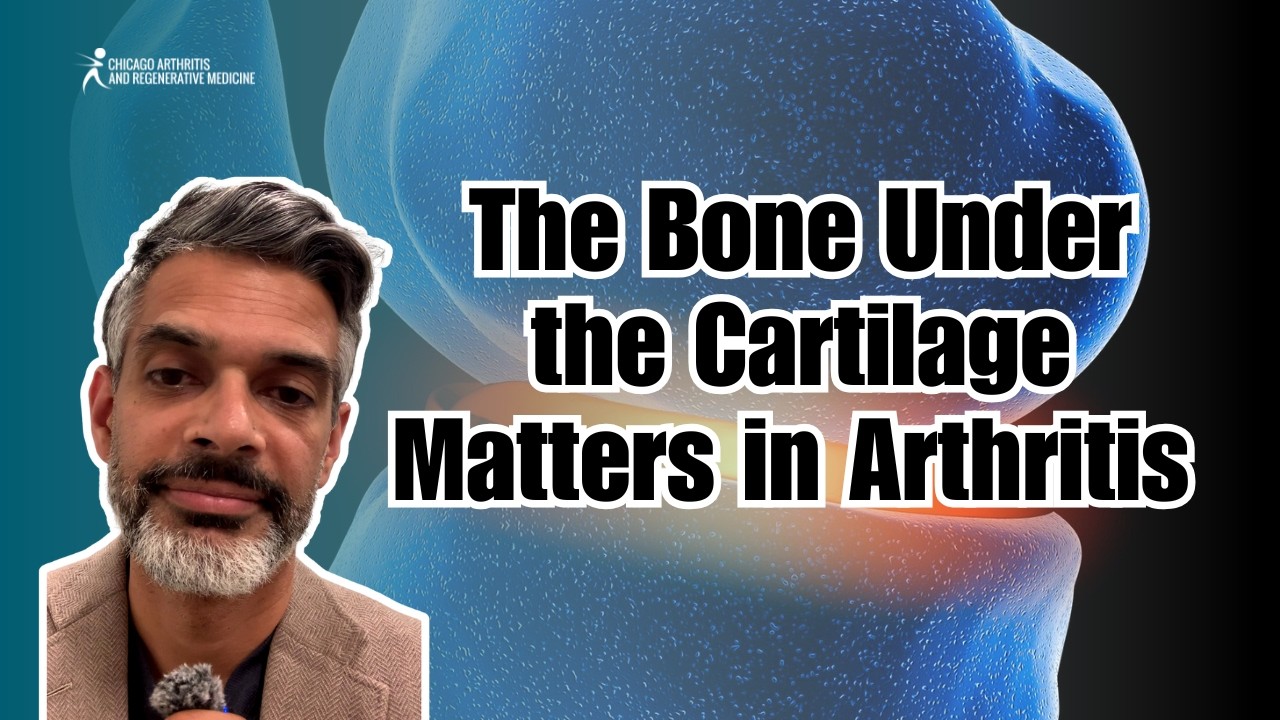
Osteoarthritis Is More Than Cartilage Loss
When most people think about osteoarthritis, they think about worn-out cartilage. While cartilage degeneration is a key part of the disease, it is not the only structure involved. In advanced osteoarthritis, the bone beneath the cartilage—called the subchondral bone—can also become damaged and contribute significantly to pain and disease progression.
What Is the Subchondral Bone?
The term “subchondral” simply means underneath the cartilage. This layer of bone serves as the foundation that supports the cartilage covering the ends of the joint surfaces.
As cartilage becomes thinner over time, the subchondral bone is forced to absorb more stress. This increased load can lead to irritation, inflammation, swelling, and pain within the bone itself.
Why Subchondral Bone Health Matters
Cartilage has a very limited blood supply. Much of its nutrition and support comes from the underlying subchondral bone. When that bone becomes damaged, the cartilage above it may become more vulnerable to further degeneration.
This means that damage within the subchondral bone can contribute not only to pain but also to ongoing deterioration of the joint.
What MRI Findings Can Reveal
In many patients with advanced osteoarthritis, MRI scans may show bone marrow edema or bone marrow lesions within the subchondral bone.
These findings are important because they are often associated with:
- Increased joint pain
- Active inflammation within the bone
- Faster progression of osteoarthritis
- A greater likelihood of needing knee replacement surgery in the future
Bone marrow lesions are not simply imaging abnormalities—they can be indicators of a more active and aggressive arthritic process.
Looking Beyond the Joint Space
When discussing osteoarthritis treatment, many conversations focus solely on cartilage and joint space narrowing. However, a true disease-modifying approach requires evaluating the deeper structures within the joint.
To effectively address osteoarthritis progression, clinicians must consider:
- Cartilage health
- Ligament function
- Joint inflammation
- The overall joint environment
- Subchondral bone integrity
Ignoring any of these factors may limit treatment effectiveness, especially in advanced cases.
How Bone Marrow Concentrate May Help
Bone marrow concentrate (BMC) is an advanced regenerative medicine treatment that may be used in appropriate patients to target damaged subchondral bone.
The goal of treatment is to:
- Support healing within the irritated bone
- Improve the joint environment
- Preserve remaining cartilage
- Reduce pain
- Potentially slow disease progression
By addressing the underlying bone, treatment may provide benefits that extend beyond simply managing symptoms.
What the Research Shows
Research conducted by Dr. Philippe Hernigou and colleagues in France has demonstrated promising results when bone marrow concentrate is used to treat the subchondral bone in patients with knee osteoarthritis.
Their findings suggest that treating the underlying bone may help reduce progression to knee replacement surgery more effectively than treating the joint space alone.
This highlights an important concept: successful osteoarthritis management is not only about how a patient feels today—it is about influencing the long-term health of the joint.
A More Complete Approach to Osteoarthritis
In advanced osteoarthritis, the key question should not simply be, “How much cartilage has been lost?”
It should also be:
“Is the subchondral bone damaged or inflamed?”
If the answer is yes, treating the cartilage alone may not be enough.
A comprehensive, disease-modifying strategy focuses on the entire joint—including cartilage, ligaments, inflammation, and the subchondral bone—to help preserve function and reduce the risk of future joint replacement surgery.
Schedule a Consultation
If your goal is to slow the progression of osteoarthritis and explore advanced regenerative medicine options, DM us or contact our office to schedule a consultation and learn whether a comprehensive joint-preservation approach may be right for you.
Is Your Rheumatoid Arthritis Flaring? How to Spot Them and Take Action
Rheumatoid Arthritis & Heart Disease: The Hidden Risk You Need to Know
Rheumatoid Arthritis vs. Fibromyalgia: What’s Really Causing Your Chronic Pain?