
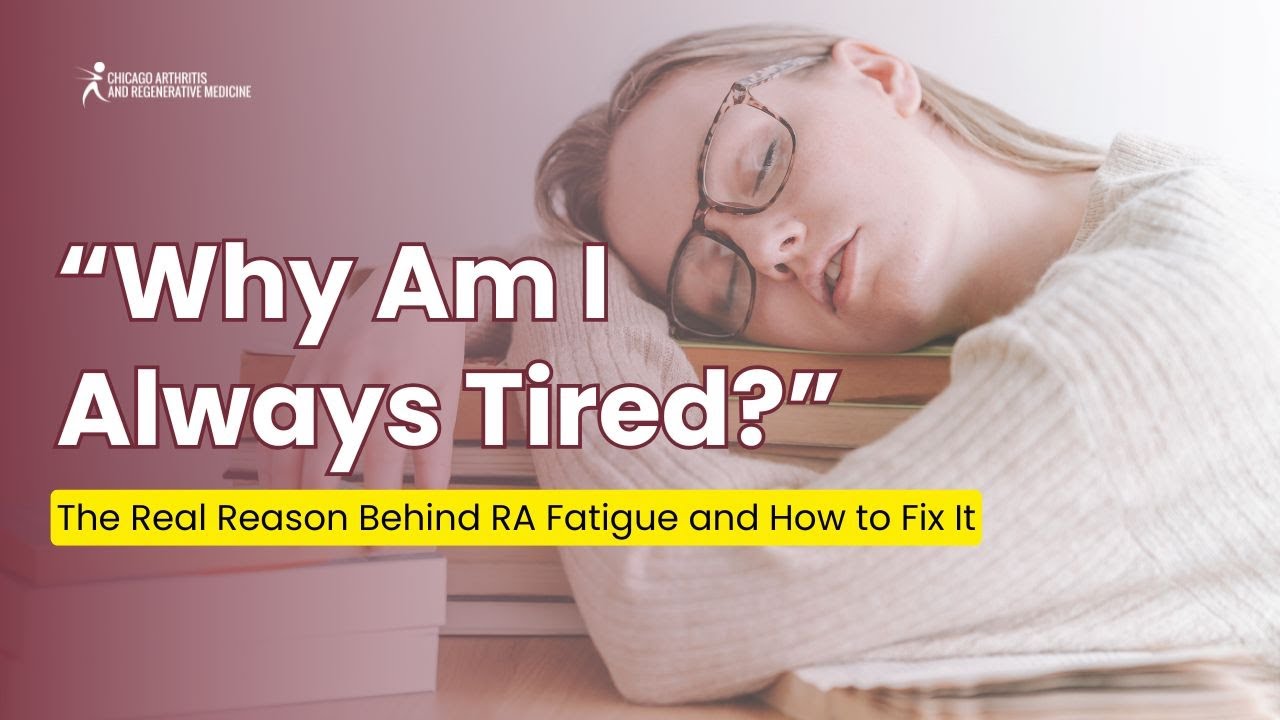
Fatigue is one of the most frustrating symptoms of rheumatoid arthritis (RA). Even when lab results look normal, patients often feel deeply exhausted. This is more than just being tired—RA fatigue is a persistent, draining feeling that sleep alone can’t fix.
According to Dr. Siddharth Tambar of Chicago Arthritis and Regenerative Medicine, understanding and managing RA fatigue starts with addressing its many causes. Here’s how you can start regaining your energy—one step at a time.
Why Does RA Cause Fatigue?
RA fatigue has multiple contributors:
-
Chronic inflammation: Your immune system is always active, draining your energy.
-
Pain and poor sleep: Pain disrupts rest, making you feel worse.
-
Medication side effects: Some treatments help inflammation but can cause fatigue.
-
Deconditioning: Less movement leads to weaker muscles and more fatigue.
-
Mood: Depression and anxiety, common in RA, also reduce energy.
-
Nutritional or metabolic issues: Low iron, B12, thyroid issues, and insulin resistance can add to fatigue.
What RA Fatigue Feels Like
RA fatigue means waking up tired, struggling to focus, and needing naps without feeling refreshed. It’s not laziness—it’s a real and treatable part of the disease.
Proven Principles to Reduce RA Fatigue
1. Control Inflammation
Fatigue won’t improve without managing inflammation. Work with your rheumatologist to find the right medication or lifestyle changes to keep RA under control.
2. Improve Your Sleep
Better rest means more energy. Set a consistent bedtime, limit screens and caffeine, and treat pain before bed. Evaluate for sleep apnea if you’re still tired after 7–8 hours of sleep.
3. Move More
Gentle movement reduces fatigue. Start with walking, yoga, or swimming. Even 15 minutes daily helps improve energy, reduce pain, and enhance sleep.
4. Eat Well
Whole foods, vegetables, lean proteins, and healthy fats can help. Avoid sugar and processed foods that cause energy crashes. Stay hydrated and check for deficiencies in vitamin D, iron, or B12.
5. Mind-Body Connection
Mental health affects physical energy. Use stress management techniques like meditation or deep breathing. Practice energy budgeting—plan your day and allow recovery time.
6. Rule Out Other Causes
Ask your doctor to check your thyroid, blood sugar, and iron levels. Addressing other conditions like sleep apnea or insulin resistance can significantly improve fatigue.
Real-World Example
A 42-year-old woman with RA in remission still felt exhausted. Labs revealed low iron, borderline B12, and untreated sleep apnea. With iron supplements, B12 shots, and sleep apnea treatment, her fatigue improved by 70%—without changing her RA meds.
Small Steps, Big Impact
RA fatigue is complex, but not impossible to manage. Consistent sleep, better nutrition, movement, and mental wellness strategies all help. Think of each action as a puzzle piece. Alone they’re small—but together, they create a better quality of life.
Can You Prevent or Reverse Joint Damage from Rheumatoid Arthritis? What You Need to Know
Will Your Kids Inherit Rheumatoid Arthritis? What Science Says About Your Risk!